The World in Focus
The 81st session of the United Nations General Assembly in New York has once again highlighted the organization’s severe structural limitations in addressing escalating armed conflicts and global challenges such as climate change and artificial intelligence. Criticized by world leaders including Javier Milei, who branded it a “useless organization” bent on imposing “Orwellian” agendas, referring to the 2030 and 2045 Agendas, the UN remains the only forum in the world where, at least in its General Assembly, representatives from 193 countries have the opportunity to be heard under the same rules. Thus, the plenary session witnessed Lula da Silva’s eloquent opening remarks, the mass walkout of delegations during Benjamin Netanyahu’s speech, Keiko Fujimori’s pathetic address, Donald Trump’s imperial and threatening rhetoric, and the defiant speech by Iran’s Masoud Pezashkian.
The importance of this sort of global conclave is by no means insignificant, even though it is based on a profoundly undemocratic institutional framework where the major powers shield their interests through the right of veto in the Security Council. This flaw also affects the election of the secretary-general, which has been underway since July to replace António Guterres whose term expires in December.
A Secretary-General Subservient to Power
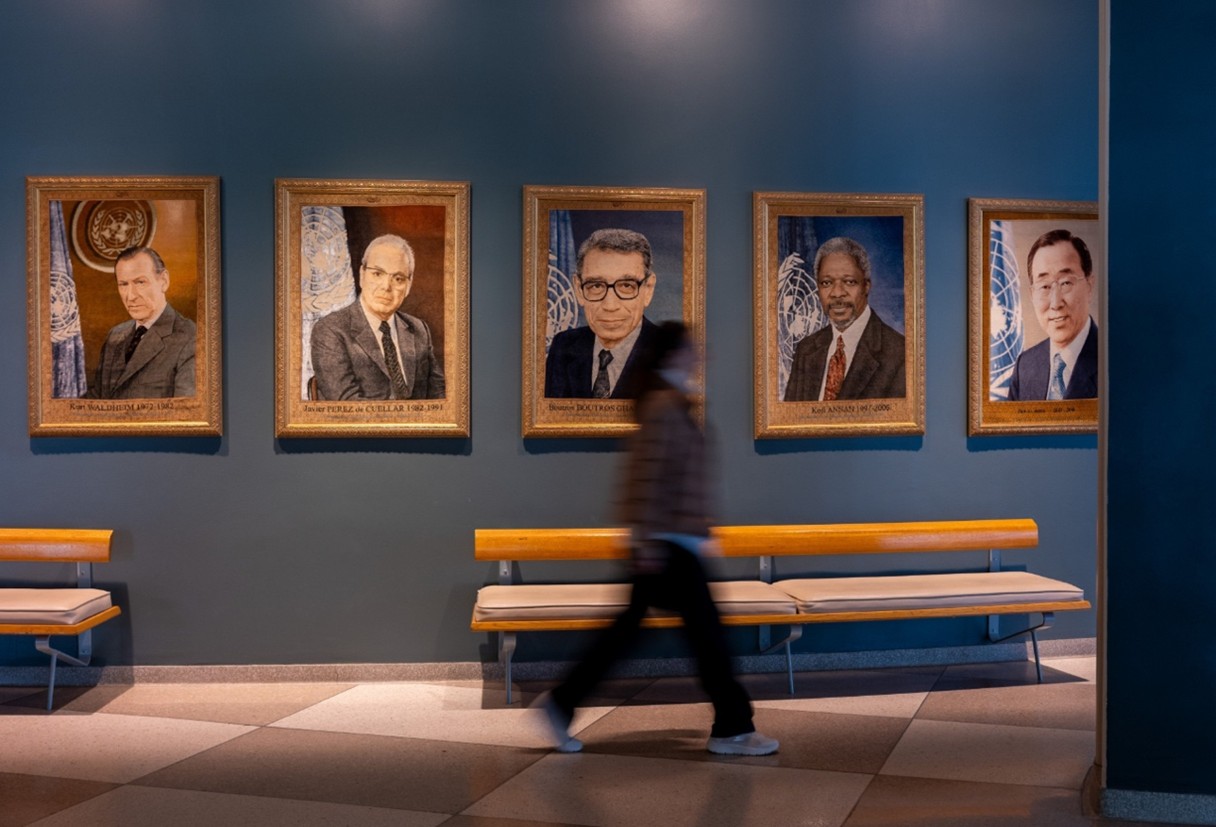
For at least the last several decades, there have been proposals and strong international pressure to democratize the U.N. and make the process of electing the United Nations Secretary-General more transparent. The BRICS countries, for example, demand an election process that is transparent and merit-based and ends the secret deals in the Security Council. They have also led the diplomatic push to make gender equality a central democratic pillar in the selection process. In the UN’s more than 80-year history, there has never been a woman at the helm of the Secretariat.
The ACT Group (Accountability, Coherence, and Transparency), composed of 27 small and medium-sized countries (including Switzerland, Costa Rica, Jordan, and Uruguay, among others), demands that the Security Council present multiple candidates to the General Assembly rather than recommending a single person, so that all UN member states can exercise a truly democratic vote. Likewise, the global “1for8Billion” campaign—a coalition of more than 100 civil society organizations and states—pushed for democratic reforms that led to the adoption of General Assembly Resolutions 69/321 and 79/327, which mandate that the current election process to replace Guterres include televised public hearings and open debates covered by international media.
Despite these democratic window-dressing measures, the final outcome is determined by so-called “straw polls,” held behind closed doors within the Security Council, and the decision rests with its five permanent members (China, the United States, France, the United Kingdom, and Russia). A candidate for the position can have all the votes of the ten rotating members of the Security Council, but a veto by just one of the five permanent members is enough to derail the candidacy. The rest of the countries merely ratify the decision of the five powerful members of the Security Council in the General Assembly.
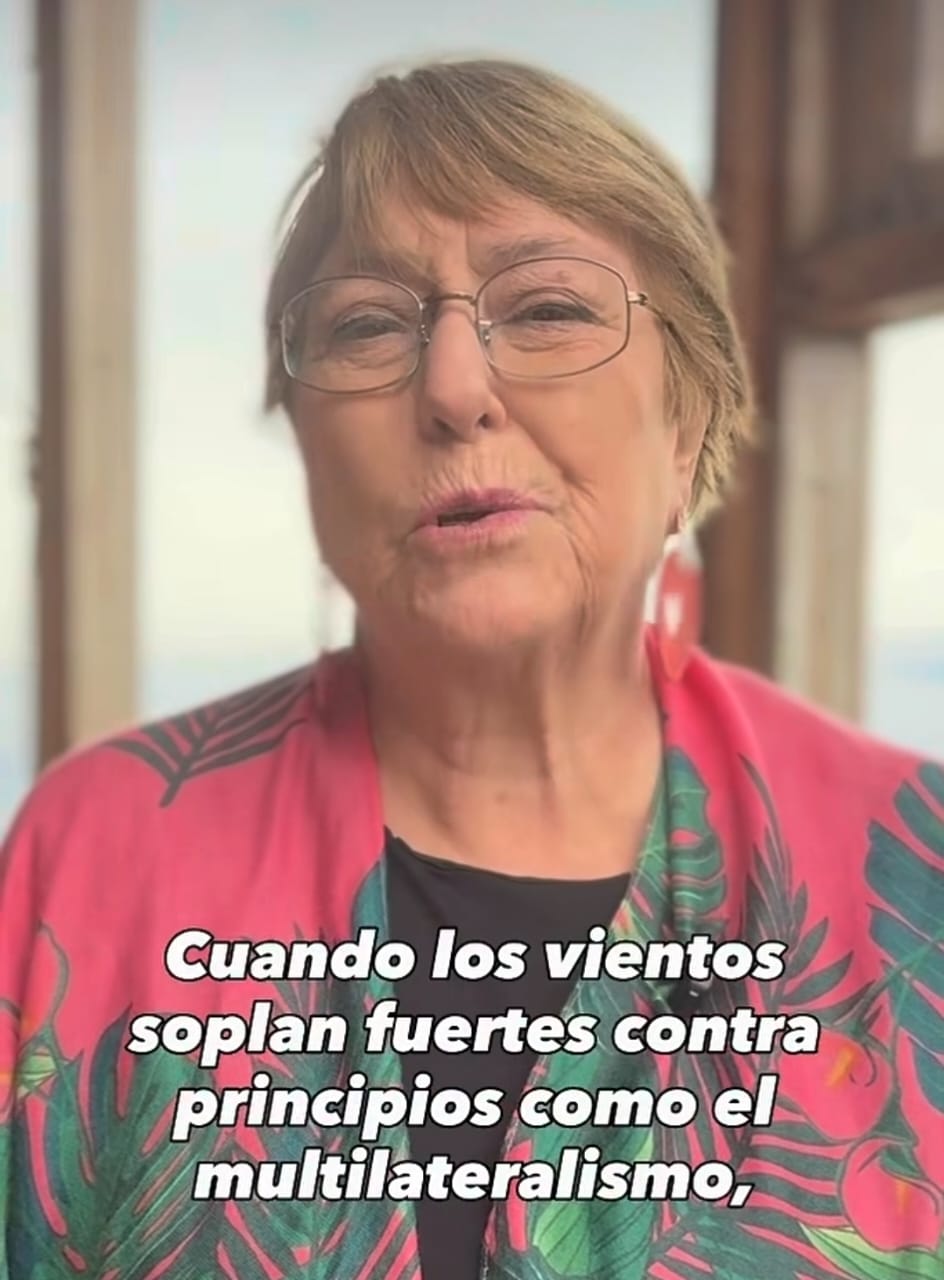
Currently leading the informal polls are regional figures Rebeca Grynspan of Costa Rica and Carolyn Rodrigues Birkett of Guyana. Candidate Michelle Bachelet, two-term president of Chile, former executive director of UN Women, and former UN High Commissioner for Human Rights, withdrew her candidacy on September 19 upon learning that she did not have sufficient support. In a video posted on her social media accounts, she said: “Some may think that this was not the right time for the kind of candidacy I intended to represent, in a context where strong winds are blowing against principles such as multilateralism, against international law, which is repeatedly violated; against the reality of climate change, which some continue to deny despite scientific evidence; and against democracy and human rights, which are under threat.” “On the contrary, although it was an arduous task from the outset, I remain convinced that this was precisely the moment to raise my voice in defense of these principles, which I have proudly placed at the center of my candidacy.”
The Fight Against the Security Council‘ VEto POWER
Countless proposals have emerged to eliminate the superpower wielded by countries with veto power, even within the UN itself. One example is the Franco-Mexican Initiative on the Regulation of the Veto, presented in September 2015. At that time, the two nations presented a political declaration to suspend the veto in cases of mass atrocities. Its goal is to secure a voluntary and collective commitment from the five permanent members of the Security Council not to use the veto when decisions must be made regarding genocide, crimes against humanity, and war crimes committed on a large scale, thereby preventing the blocking of humanitarian aid. On Monday, the United Kingdom joined this initiative, bringing the total number of signatory states to 128—just one country short of securing the support of two-thirds of UN members (129 out of 193). While this is a significant political milestone, it is legally insufficient, as the five veto-wielding members must sign it.
In April 2022, the General Assembly adopted a historic measure known as the “Veto Initiative” (Resolution 76/262), originally proposed by Liechtenstein, which established a mechanism for mandatorily convening a debate session in the General Assembly whenever a permanent member of the Security Council exercises a veto. Although this cannot overturn the veto, the country exercising it must face scrutiny from the entire international community in an open debate, which has allowed the General Assembly to wrest political centrality from the Security Council and highlight the isolation of its positions. It is a kind of internal democratic counterweight.
The BRICS countries exert constant diplomatic pressure to reform the system. But in this specific area, they lack a unified stance: while China and Russia already hold permanent seats and protect their status, India and Brazil actively demand their own admission to the Security Council, despite their strong criticism of that system.
In contrast, Africa set forth a unified position in the 2005 Ezulwini Consensus on the African Union’s stance on the reform of the United Nations and the Security Council. The African bloc’s strategy is based on three premises:
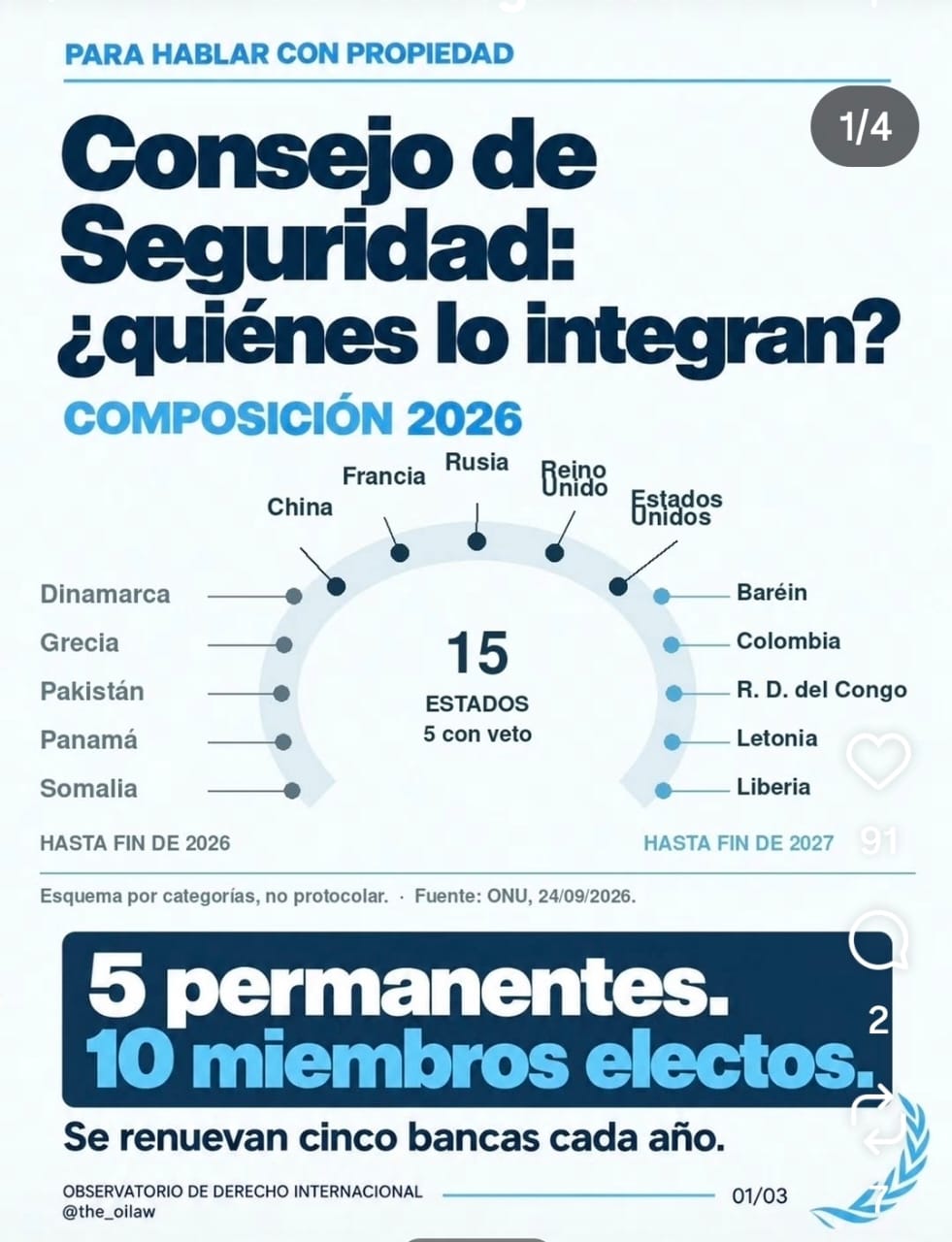
- It explicitly refuses to accept permanent seats without veto power because that would “institutionalize second-class membership” for a continent representing 54 nations;
- It demands two permanent seats with veto power (if the veto is retained for the others) and five non-permanent seats;
- It stipulates that the African Union would decide on a rotating basis which countries would occupy those seats, thereby preventing any single African power from monopolizing power in the region.
This is a fundamental difference from Latin America, which lacks a unified stance. Argentina and Mexico have historically opposed Brazil’s inclusion among the permanent members of the Security Council to prevent it from permanently representing the region. Brazil went it alone by joining the G4 (a coalition comprising Brazil, Germany, India, and Japan), which calls for the expansion of the Security Council through the creation of new permanent seats for itself, arguing that the 1945 composition no longer reflects the economic or demographic reality of the 21st century. On the other hand, the G4 faces opposition from the so-called Coffee Club (officially known as the United for Consensus Movement, led by countries such as Italy, Pakistan, Argentina, Mexico, and Spain), which rejects the expansion of members with veto power on the Security Council. Instead, they propose expanding only the elective, non-permanent seats. They propose increasing the number of members from 15 to 27, thereby reducing the relative political weight of each permanent member’s individual vote. The group consists of a core of 12 member countries and has the informal support of some 25 additional countries.
Financial Asymmetry: The Bretton Woods Institutions
The paralysis of reforms is not unique to political diplomacy; it extends in exactly the same way to the pillars of the international economic architecture.
The institutions born of the postwar order, specifically the International Monetary Fund (IMF) and the World Bank, operate under a strategic design that prevents their reform. Unlike the “one country, one vote” principle that formally governs the UN General Assembly, global financial governance is based on a quota system directly proportional to capital contributions, which gives the traditional Western powers an overwhelming advantage.
Currently, the United States alone holds 16.49% of the votes in the IMF. Any major structural reform initiative, such as the redistribution of quotas or the adjustment of voting power, requires an absolute majority of 85% to be approved. With 16.49% of the votes in the IMF, the United States retains the legal ability to veto, on its own, any proposal aimed at balancing the decision-making system.
This rule blocks the legitimate demands of the BRICS countries for an urgent adjustment to voting power that reflects the actual size and current dynamism of developing economies. Although the BRICS countries account for nearly 35% of the global economy, they control only 18.86% of the votes.
To circumvent the stagnation of the Bretton Woods system, the BRICS bloc is focusing its efforts on building a parallel financial infrastructure such as the New Development Bank (NDB), a multilateral institution headquartered in Shanghai and deliberately conceived as a sovereign counterweight to the World Bank—an institution that prioritizes granting loans in local currencies intended primarily to finance large infrastructure projects. The NDB is substantially smaller than the World Bank, but its strategy is not to compete head-on in terms of size, but rather in terms of the rules of the game.
Likewise, the BRICS are moving toward de-dollarization by using local currencies in their trade transactions. The most significant financial advancement centers on replacing the SWIFT interbank messaging network. Faced with the risk of being disconnected from this system—controlled by Western countries as a means of political pressure—the BRICS have driven the development of alternative platforms such as mBridge, an innovative multilateral platform for central bank digital currencies that bypasses the intermediation of U.S. correspondent banks.
The harsh reality is that the system is designed to ensure that everything remains the same. The road ahead is long. Bretton Woods operates as a mirror image of the Security Council: a fortified structure designed to prevent global political and financial control from changing hands.
“The World in Focus” is Ariela Ruiz Caro’s column for Mira: Feminisms and Democracies. Ruiz Caro is an economist and researcher at the Center for Development Studies and Promotion (DESCO). She has served as an official and international consultant on trade, integration, and natural resources for CEPAL, the Latin American Economic System, and the Institute for the Integration of Latin America and the Caribbean, the Andean Community, the Mercosur Permanent Represetatives Committee and Economic Attaché at the Peruvian Embassy in Argentina. arielaruizcaro@gmail.com