December 7, 2023 Decolonialismo

La creación de espacios de mujeres en el movimiento indígena mexicano

Una entrevista con Gabviota Libertad, Consejo Nacional Indígena-Yucatán

Por Olivia León 

El 25 de noviembre como Día internacional para la eliminación de la violencia contra las mujeres tiene sus orígenes en el movimiento feminista latinoamericano en 1980. Surgió como respuesta y conmemoración al asesinato de las hermanas Mirabal en República Dominicana. En 1999, la Asamblea General de Naciones Unidas reconoció dicha fecha como una conmemoración internacional para invitar “a los gobiernos, los organismos, órganos, fondos y programas (…) a que organicen ese día actividades dirigidas a sensibilizar a la opinión pública respecto del problema de la violencia contra la mujer”.

Desde el 25 de noviembre, hasta el 10 de diciembre, Día internacional de los derechos humanos, son los 16 días de activismo para erradicar la violencia contra las mujeres como un compromiso frontal para garantizar los derechos humanos. Se trata de visibilizar las violencias, contarlas para entenderlas y atenderlas. 

Es importante reconocer las acciones de organizaciones de mujeres en todo el mundo para erradicar y prevenir las violencias. En el marco de este 25 de noviembre, ponemos la mira en la importancia de crear espacios de mujeres al interior de los movimientos. En esta entrevista, Gabviota Libertad, quien participa en el Congreso Nacional Indígena del Congreso Nacional Indígena (CNI) de Yucatán. 

Los encuentros zapatistas de mujeres abren posibilidad de espacios seguros 
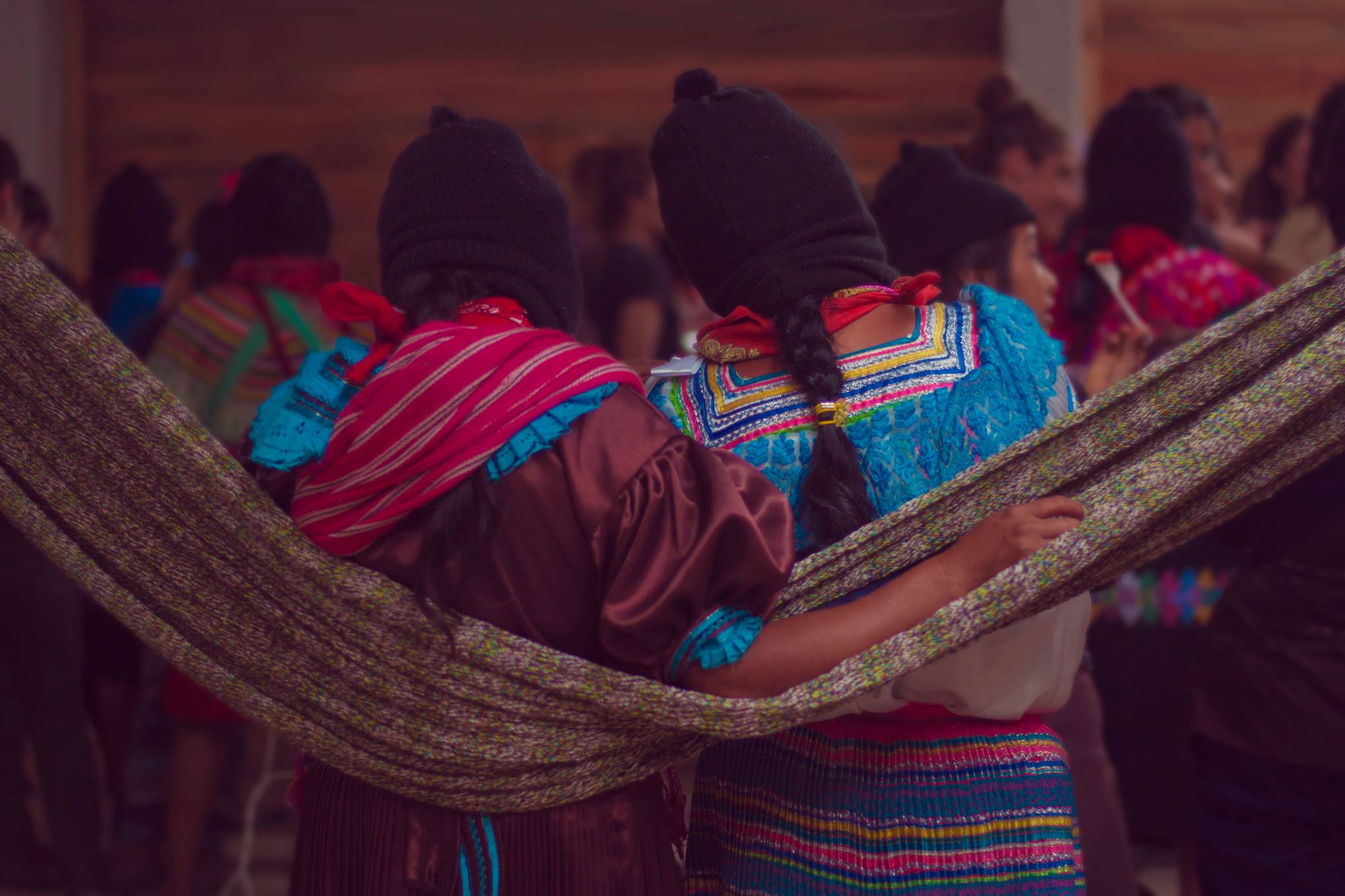
Primer encuentro de Mujeres que Luchan (2018), Chiapas, Caracol Morelos. Foto: Alejandra García

Reconocer las violencias individuales y colectivas ha permitido tomar acciones para actuar y disminuirlas e iniciar procesos de sanación. Esto requiere de espacios para recibir denuncias y testimonios en un ambiente seguro y solidario. El Primer Encuentro de Mujeres que Luchan, convocado por las mujeres zapatistas del Ejército Zapatista de Liberación Nacional (EZLN), ofreció este espacio e impulsó en la creación de espacios de mujeres también en el seno del CNI.

En el Comunicado del Comité Clandestino Revolucionario indígena-comandancia general del EZLN que llamaba al encuentro de mujeres para el 2018, dice “Bien que lo sabemos que el mal sistema no sólo nos explota, nos reprime, nos roba y nos desprecia como seres humanos, también nos vuelve a explotar, reprimir, robar y despreciar como mujeres que somos.” Violencia tras violencia. La única condición para unirse a aquel encuentro era: “que seas mujer y que luchas como sea en contra del capitalismo patriarcal y machista”. 

Gabviota Libertad, quien lleva alrededor de 10 años participando en la Asamblea del CNI del CNI y de joven fue miembro del Frente Zapatista de Liberación Nacional, compartió con Mira: feminismos y democracias su experiencia en el Primer Encuentro: 

“Ésta fue la primera invitación en donde no había compañeros. Fue una experiencia diferente. 7 mil mujeres de diversas partes e México y el mundo; fue una convocatoria internacional. Había carteles en donde te inscribías: podrías dar charlas sobre infancias, por ejemplo, o de menstruación consciente. Lo que cada quien quería. Había quienes se despertaban temprano para hacer yoga. Otras estaban jugando basquetbol o fútbol con las compas zapatistas deportistas. Había otras que hacían música; llevaron tambores e instrumentos. Otras que estábamos con la cosa política. Era una locura.” 
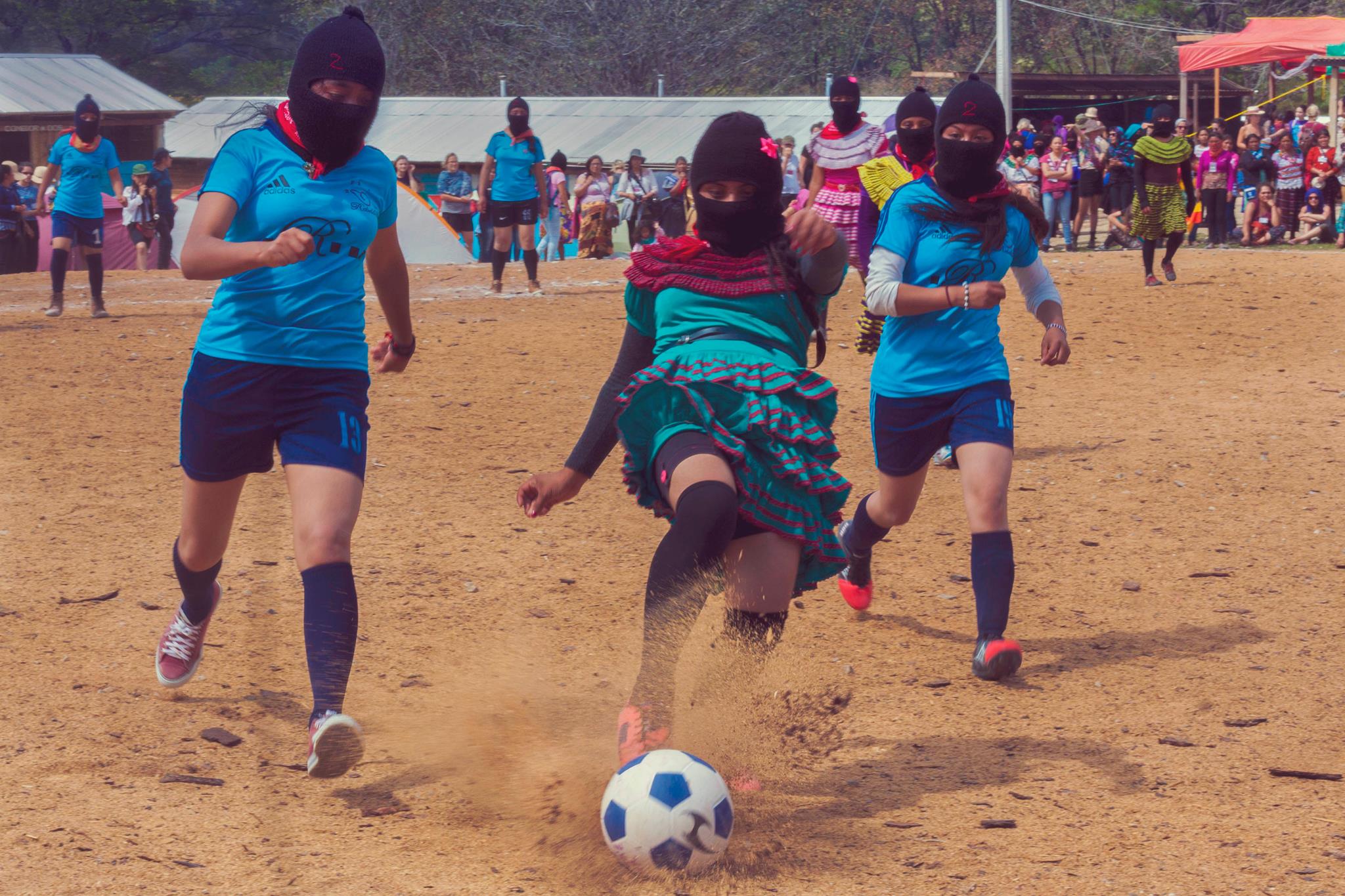
Mujeres zapatistas con pasamontañas juegan fútbol en el Primer encuentro de Mujeres que Luchan (2018), Chiapas, Caracol Morelos.
Mujeres zapatistas con pasamontañas juegan fútbol en el Primer encuentro de Mujeres que Luchan (2018), Chiapas, Caracol Morelos. Foto: Alejandra García

Posterior al encuentro, se fueron pensando y diseñando talleres de formación sobre el patriarcado, el capitalismo, el extractivismo y las experiencias de organización autónoma, que servían para intercambiar experiencias, analizar contextos y entender mejor las formas de opresión sistémicas y las resistencias de las mujeres en todo el mundo. 

Un año después, en el 2019, las zapatistas convocaron al Segundo Encuentro de Mujeres que Luchan. Esta vez, con un solo tema: la violencia contra las mujeres. “Y ese tema en dos partes: Una denuncia y otra ¿qué vamos a hacer para parar esa masacre que nos están haciendo”, como establecieron las zapatistas en el comunicado al Segundo Encuentro de Mujeres que Luchan. En este espacio, por y para mujeres y la niñez, cientos de mujeres dieron sus testimonios de las violencias que habían sufrido, algunas, denunciando por primera vez en la vida.
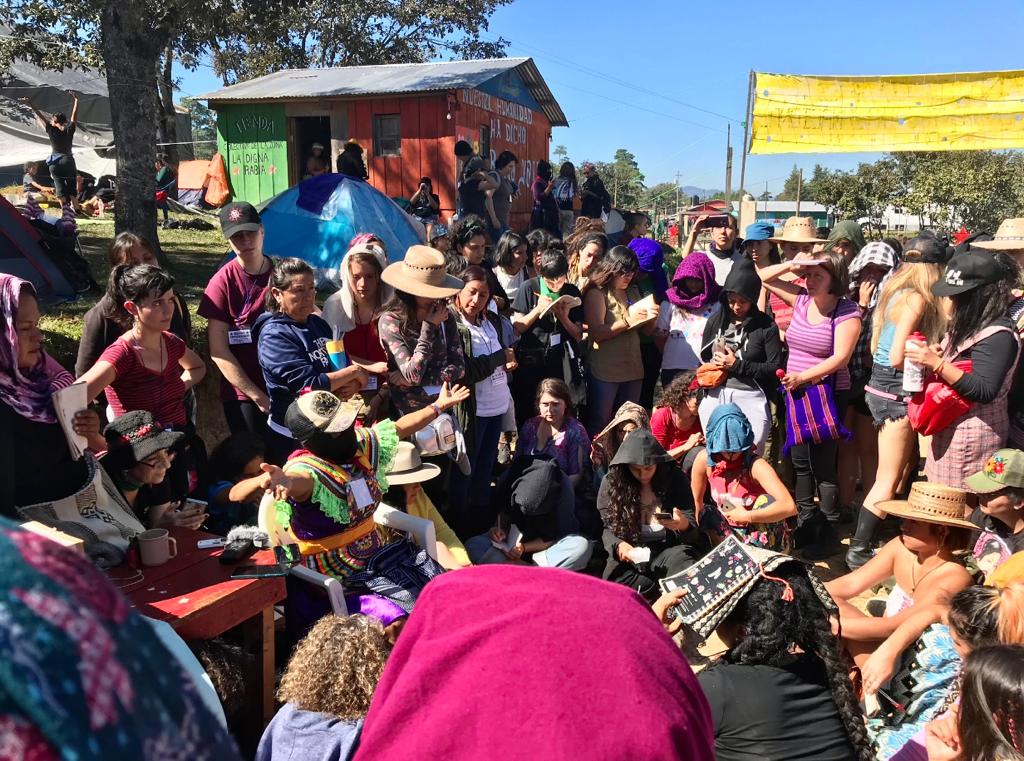
Mujeres se colocan en círculo para escuchar atentamente a una mujer sentada. Viste traje tradicional y pasamontañas y tiene los brazos abiertos. Mira: feminismos y democracias
Segundo Encuentro de Mujeres que Luchan. Chiapas, 2019. Foto: Laura Carlsen

La creación de espacios para mujeres en el CNI

El Primer Encuentro de Mujeres que Luchan fue el catalizador para continuar con la creación de espacios donde las mujeres de las diferentes regiones que participan en el CNI han podido encontrarse para dialogar y tomar acuerdos como mujeres. Así, tras el nombramiento en 2017 de la vocera del CIG – CNI, la compañera Marichuy, también se conformaron diferentes grupos de trabajo, uno de ellos el grupo de trabajo de mujeres. Una de las primeras acciones del grupo de trabajo, fue organizar un primer encuentro de mujeres CIG/CNI con mujeres de México CDMX y después, ese mismo año 2018, un encuentro Nacional de Mujeres.

“Siempre buscamos que haya procesos de formación política, y ésta siempre era sobre el capitalismo. Después del encuentro convocado por las compas zapatistas, nosotras planteamos a la Coordinación (del CNI) la necesidad de un taller de formación política sobre el patriarcado.”

Gabviota Libertad

En el primer encuentro convocado por el CNI, en el 2018, se reunieron mujeres indígenas de todo el país y de diferentes organizaciones, entre ellas, otomíes, wixárika, yaquis, cholultecas. Fue importante intercambiar experiencias con mujeres que venían de la ciudad y el campo, del sur y del norte. Quedó claro que había vivencias compartidas por el hecho de ser mujeres.
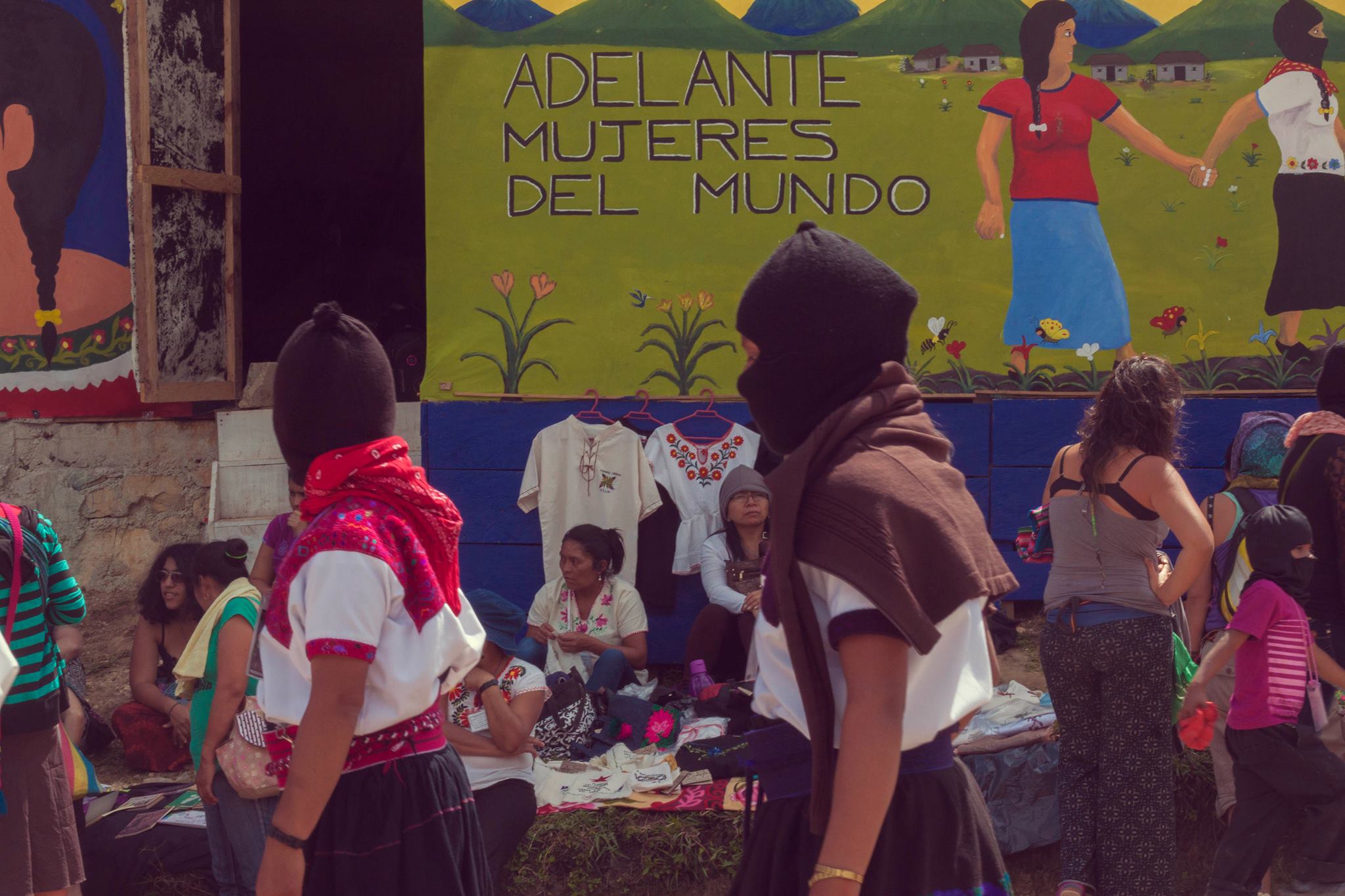
Primer Encuentro de Mujeres que Luchan. Foto: Alejandra García

Gabviota explica que desde siempre se hablaba de estas vivencias, pero no en las Asambleas Generales, sino informalmente entre las mujeres que participaban: “En las Asambleas Generales sí hablábamos de violencias. Los temas de los que hablábamos giraban en torno a los problemas grandes: el acueducto de los yaquis que se les está quitando el agua, en la península antes del Tren Maya teníamos la siembra de la soya transgénica, la inmobiliaria –temas de la lucha anticapitalista. ¿Cómo le vamos a hacer para enfrentar estos procesos de opresión, de despojo que estamos enfrentando como pueblos? Claro que traía una connotación de violencia de género, pero de eso casi no se hablaba”. 

Todos estamos abajo, todos estamos jodidos y todos estamos oprimidos, pero hay quienes estamos más abajo y más oprimidas.
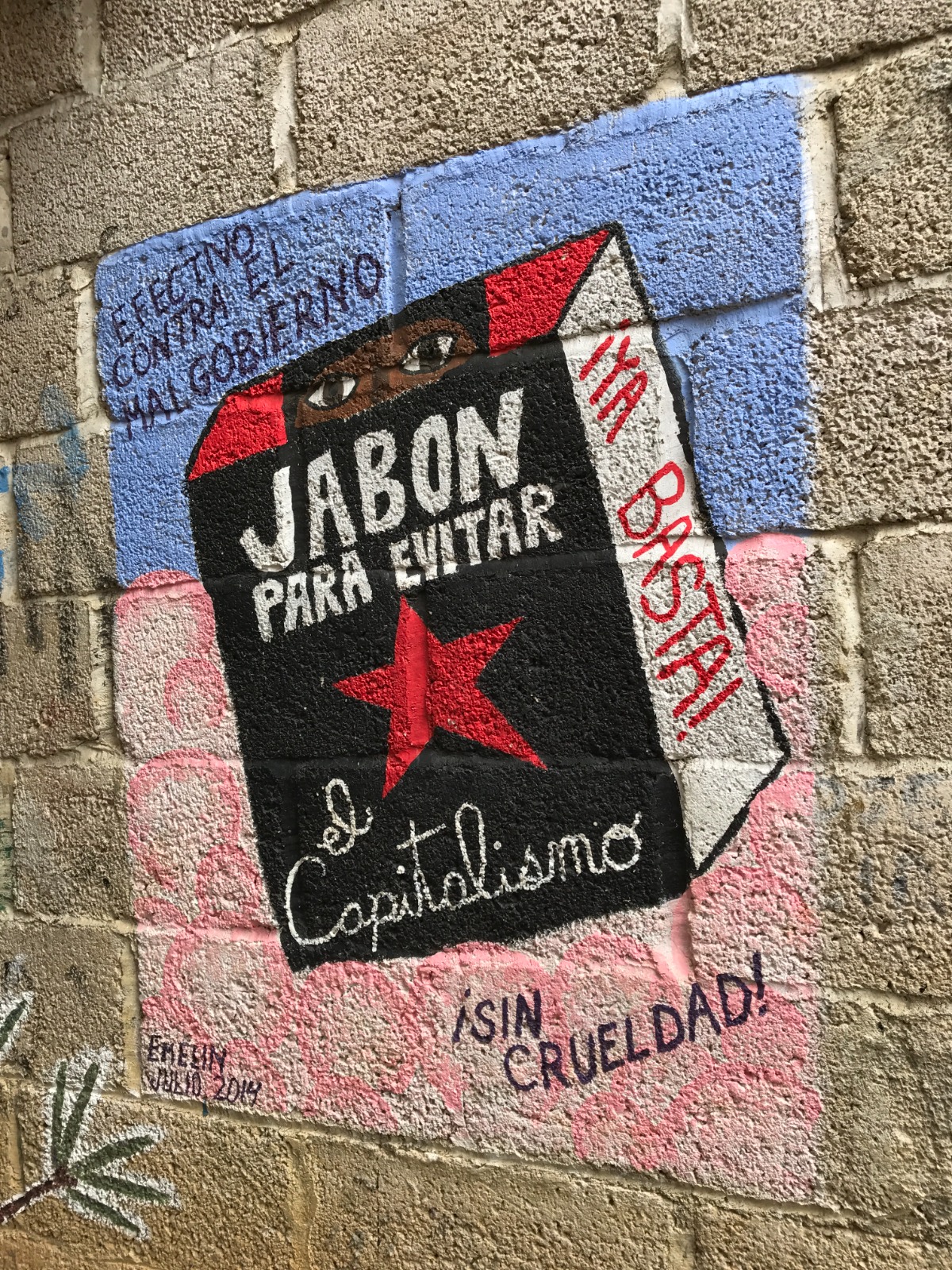
Jabón para evitar el capitalismo. Caracol Resistencia y Rebeldía por la Humanidad, 2017. Foto: Olivia León

“Lo que decimos nosotras en el grupo es que a todos nos es sencillo ser anticapitalistas. De por sí lo somos. Los compas de todas las organizaciones siempre hemos sido antisistema. Pelear contra el capital es pelear hacia afuera. Adentro del CNI no hay un empresario queriendo joder a otros. El anticapitalismo es muy frontal. Cuando decimos que nuestra lucha, además de anticapitalista es antipatriarcal, decimos que vamos a luchar también para erradicar ese otro mecanismo de opresión, porque nos damos cuenta que existe un sistema mucho más antiguo que el capitalismo, un sistema que es la raíz de todo este desastre y que nos ha llevado a esta situación: se trata del sistema patriarcal o el patriarcado. Por eso, retomamos de algunas compañeras de Bolivia la idea de que ‘El patriarcado es el origen de todas las opresiones, todas las explotaciones, todas las violencias y  discriminaciones que vive la humanidad y la naturaleza’ y que se fue construyendo desde hace miles de años, de manera violenta sobre la explotación y desvalorización de las mujeres y de su cuerpo.”

Gabviota señala que el proceso implicaba reconocer que, “todos estamos abajo, todos estamos jodidos y todos estamos oprimidos, pero hay quienes estamos más abajo y más oprimidas.”

Explica que, con nombrarse antipatriarcales, se presentó un reto importante hacia el interior de la organización porque era una transformación en el discurso que no podría quedarse en palabras. Las mujeres en el grupo de trabajo de mujeres del CNI se comprometieron con que los cambios resultaran en acciones y, para ello, desarrollaron metodologías de educación popular para poder entender mejor a qué se referían cuando hablaban de la lucha antipatriarcal: ¿Qué violencias implicaba para las compañeras? ¿Por qué voltear hacia nuevos espacios, quizá más íntimos, como la comunidad, la familia, las amistades? ¿Cómo poder compaginar la lucha anticapitalista con la lucha antipatriarcal? Al final, ambas se oponen a dinámicas sistémicas de dominación y de opresión. 

Esos espacios de mujeres permitían comprender la complejidad de las múltiples capas de opresión y fortalecer a las propias organizaciones mixtas. Para ello, desarrollaron talleres de formación política sobre el patriarcado. Organizaron dos talleres a lo largo de ocho meses. Los planearon con técnicas teatrales, en donde trabajaron la sensibilización sobre lo que es ser mujer en diversos ámbitos. Era una invitación a cuestionar las diferentes experiencias y analizar sus posiciones dentro de la comunidad. 
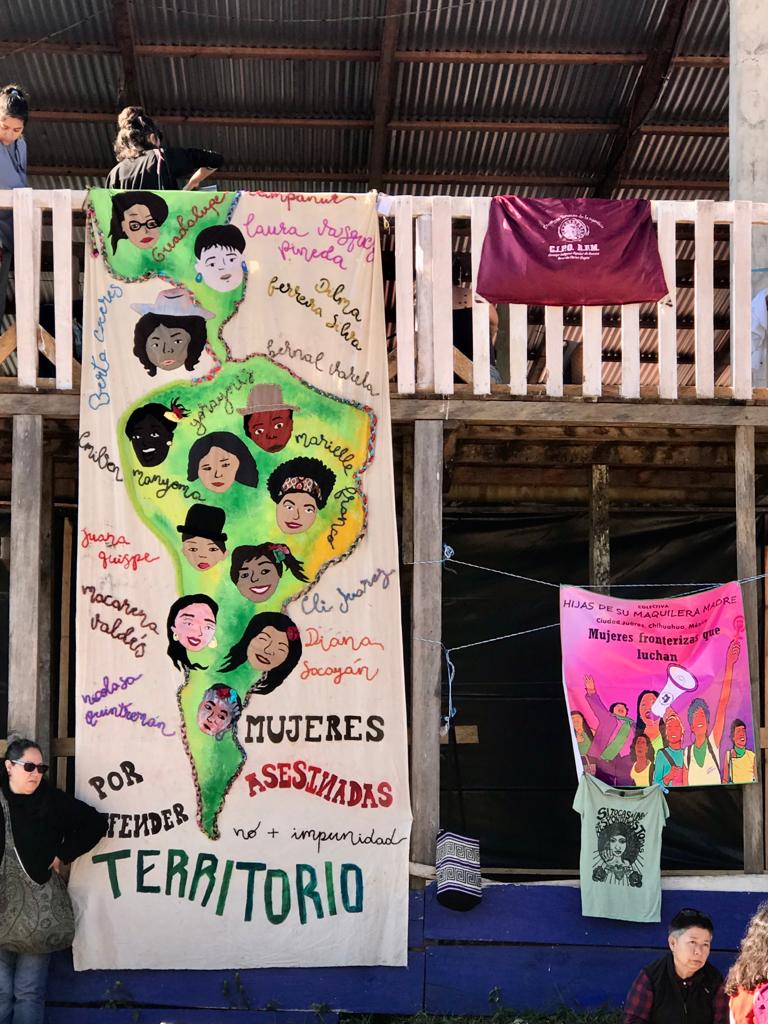
Segundo Encuentro de Mujeres que Luchan. Chiapas, 2019. Foto: Laura Carlsen

La luz que no se apaga o la semilla que se sembró

Los encuentros de mujeres, particularmente aquellos convocados por las mujeres de pueblos originarios, han enseñado lecciones fundamentales en este camino hacia la justicia y la paz. Estos espacios de encuentro han demostrado ser cruciales, no solo como lugares para visibilizar las diversas formas de violencia que enfrentan las mujeres, sino también como foros donde se construyen respuestas colectivas ante la violencia, se intercambian experiencias y se fortalece la solidaridad. 

Son un modelo inspirador de organización y resistencia y destacan la importancia de la educación popular y la colectivización de experiencias como mecanismos para la construcción de un mundo nuevo, diferente: donde quepan todos los mundos, donde nacer mujer o nacer indígena no signifique violencia, desprecio o discriminación. 

A medida se reflexiona a nivel global  sobre el 25 de noviembre y los 16 días de activismo, es importante no limitar la lucha contra la violencia de género a unos días al año. Las mujeres organizadas, desde sus propios contextos e identidades–como nos cuenta Gabviota Libertad desde el CNI, están desarrollando procesos colectivos constantes en el país, la región y el mundo. 

La construcción de espacios seguros para mujeres se erige como una piedra angular en este camino, desafiando las manifestaciones externas de violencia y las dinámicas patriarcales arraigadas en nuestras comunidades, organizaciones y estructuras sociales.
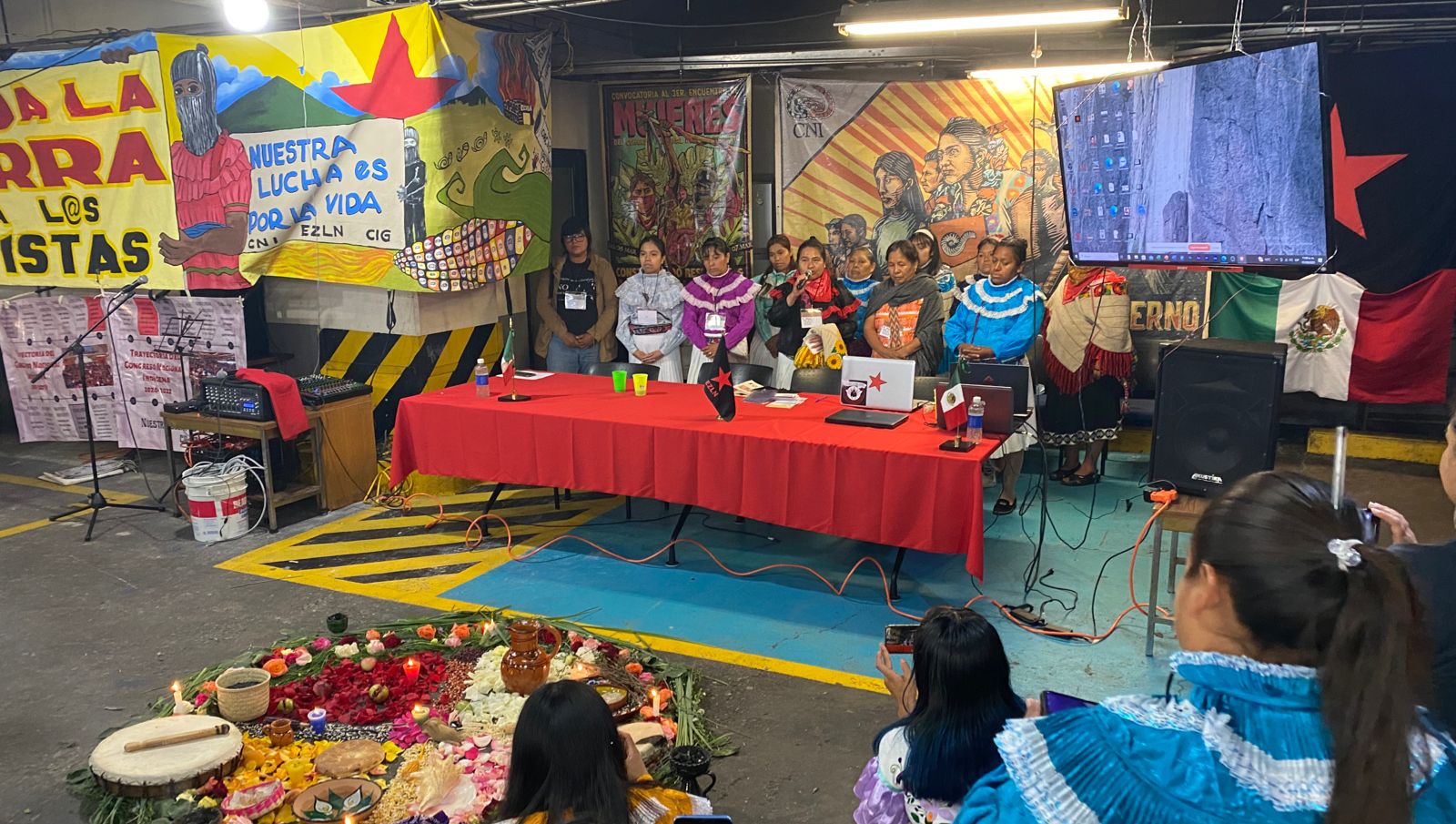
Mujeres del CNI en su 4to encuentro de mujeres, 2023
Cuarto encuentro de mujeres del CNI, 2023.

“Sabemos que este proceso va a llevar mucho tiempo porque los procesos de transformación son largos, pero una vez que despiertas a esta cosa -el feminismo, llamándolo en términos urbanos- no hay vuelta atrás. Va a tomar tiempo para que podamos decir que hemos empezado a desactivar la estructura patriarcal, pero entender cómo están las cosas te permite pensar hacia dónde caminar, soñar que a las niñas no les va a tocar más fuerte, que el mundo va a ser otro. 

En las luchas vamos a ser derrotadxs muchas veces, pero la educación popular y desde la pedagogía de la esperanza nos permitimos pensar que están cambiando las cosas.”

Gabviota Libertad

Olivia León es coordinadora de Mira: feminismos y democracias. Se especializa en temas de género, construcción de paz y justicia.

—– 

Los encuentros o talleres de mujeres y sobre el patriarcado a los que ha convocado el CNI desde el 2018 son: 

11/02/2018: Encuentro de mujeres CIG/CNI con mujeres de México CDMX

28/07/2018- 29/07/2018: Encuentro Nacional de Mujeres Sn. Lorenzo Nenamicoyan, Edo. de México

27/07/2019- 28/07/2019: Encuentro Nacional de Mujeres San Juan Volador, Pajapan, Veracruz

25/11/2019: Participación de mujeres del CNI en la Acción Latinoamericana contra todas las formas de violencia contra las mujeres y los feminicidios

20/12/2019 (caracol Jacinto Canek/cideci): Taller sobre el patriarcado y capitalismo al CIG y CNI en el marco de la cuarta asamblea entre el CNI y CIG 

12/02/2022- 13/02/2022: Taller de multiplicadores del taller sobre patriarcado del CNI Sn. Pedro Atlapulco, Edo. de México

Feb.- Ago./2022: Reproducción del taller sobre patriarcado en diferentes regiones

Agosto de 2023. Primer encuentro nacional interno de mujeres del CNI de todas las regiones
December 7, 2023 Decolonialismo

The creation of women’s spaces in the Mexican indigenous movement

An interview with Gabviota Libertad, Consejo Nacional Indígena-Yucatán

By Olivia León 

November 25 as the International Day for the Elimination of Violence against Women has its origins in the Latin American feminist movement in 1980. It arose in response to and in commemoration of the murder of the Mirabal sisters in the Dominican Republic. In 1999, the United Nations General Assembly recognized this date as an international commemoration to invite “governments, agencies, bodies, organs, funds and programs (…) to organize on that day activities aimed at raising public awareness of the problem of violence against women”.

From November 25 to December 10, International Human Rights Day, are the 16 days of activism to eradicate violence against women as a frontal commitment to guarantee human rights. It is about making violence visible, telling about it in order to understand and address it. 

It is important to recognize how women’s organizations around the world work to eradicate and prevent violence. We seek to focus on the importance of creating women’s spaces within the movements. In this interview, Gabviota Libertad, who participates in the National Indigenous Congress of the National Indigenous Congress (NIC) of Yucatán.

Zapatista women’s meetings open possibility of safe spaces

First meeting of Women in Struggle, Mujeres que Luchan, (2018), Chiapas, Caracol Morelos. Photo: Alejandra García

Recognizing individual and collective violence has allowed us to take action to reduce it and initiate healing processes. This requires spaces to report them in a safe and supportive environment. The First Encounter of Women in Struggle, convened by the Zapatista women of the Zapatista Army of National Liberation (EZLN), offered this kind of experience and encouraged the creation of women’s spaces within the NIC as well.

In the Communiqué of the Clandestine Revolutionary Indigenous Clandestine Committee-general command of the EZLN that called for the women’s meeting for 2018, it says “Well that we know that the bad system not only exploits us, represses us, robs us and despises us as human beings, it also exploits us again, represses us, robs us and despises us as the women that we are.” 

Violence after violence. The only condition to join that meeting was: “that you are a woman and that you fight against patriarchal and sexist capitalism”. 

Gabviota Libertad, who has been participating in the NIC Assembly for about 10 years and as a young woman was a member of the Zapatista National Liberation Front, shared with Mira: feminisms and democracies her experience at the First Encounter:

“This was the first invitation where there were no male comrades. It was a different experience. Seven thousand women from different parts of Mexico and the world; it was an international call. There were posters where you could sign up: you could give talks on childhood, for example, or on conscious menstruation. Whatever everyone wanted. There were those who woke up early to do yoga. Others were playing basketball or soccer with the sports-loving Zapatista comrades. There were others who made music; they brought drums and instruments. Others were with the political stuff. It was crazy.” 

Mujeres zapatistas con pasamontañas juegan fútbol en el Primer encuentro de Mujeres que Luchan (2018), Chiapas, Caracol Morelos.
Zapatista women in balaclavas play soccer at the First Meeting of Women in Struggle (2018), Chiapas, Caracol Morelos. Photo: Alejandra García

After this meeting, they thought of capacity building workshops on patriarchy, capitalism, extractivism and experiences of autonomous organization, which served to exchange experiences, analyze contexts and better understand the forms of systemic oppression and women’s resistances around the world. 

A year later, in 2019, the Zapatistas convened the Second Meeting of Women in Struggle. This time, with a single theme: violence against women. “And that theme in two parts: a denunciation and another, what are we going to do to stop this massacre that they are doing to us,” as the Zapatistas stated in the communiqué to the Second Gathering of Women Who Struggle. In this space, by and for women and children, hundreds of women gave their testimonies of the violence they had suffered, some denouncing for the first time in their lives.

Mujeres se colocan en círculo para escuchar atentamente a una mujer sentada. Viste traje tradicional y pasamontañas y tiene los brazos abiertos. Mira: feminismos y democracias
Second Meeting of Women in Struggle. Chiapas, 2019. Photo: Laura Carlsen

The creation of spaces for women in the NIC

The First Meeting of Women in Struggle was the catalyst to continue with the creation of spaces where women from the different regions participating in the CNI have been able to meet to dialogue and make agreements as women. Thus, after the appointment in 2017 of the spokesperson of the CIG – CNI, comrade Marichuy, different working groups were also formed, one of them the Women’s Working Group. One of the first actions of this group was to organize a first CIG/CNI women’s meeting in Mexico CDMX and later, that same year 2018, a National Women’s meeting.

“We always look for political training processes, and this one was always about capitalism. After the meeting convened by the Zapatista comrades, we proposed to the Coordination (of the CNI) the need for a political training workshop on patriarchy.”

The first meeting convened by the CNI, in 2018, brought together indigenous women from all over the country and from different organizations, including Otomí, Wixárika, Yaqui, Cholulteca. It was important to exchange experiences with women from the city and the countryside, from the south and the north. It was clear that there were shared experiences because they were women.

First Meeting of Women in Struggle. Photo: Alejandra García

Gabviota explains that these experiences had always been discussed; not in the General Assemblies, but informally among the women who participated. 

“In the General Assemblies we did refer to violence. The issues we talked about revolved around the big problems: the aqueduct of the Yaquis, whose water is being taken away from them; in the peninsula before the Tren Maya we had the planting of transgenic soybeans, real estate – issues of the anti-capitalist struggle. How are we going to confront these processes of oppression, of dispossession that we are facing as peoples? Of course, there was a connotation of gender violence, but that was hardly talked about.”

“We are all at the bottom, we are all screwed and we are all oppressed, but there are those of us who are lower and more oppressed.”

Soap to avoid capitalism. Caracol Resistencia y Rebeldía por la Humanidad, 2017. Photo: Olivia León

“What we in the group say is that it’s easy for all of us to be anti-capitalist. We already are. The comrades of all the organizations have always been anti-system. To fight against capital is to fight to the outside. Within the CNI there is no businessman trying to screw others. Anti-capitalism is very frontal. When we say that our struggle, in addition to being anti-capitalist, is anti-patriarchal, we mean that we are also going to fight to eradicate this other mechanism of oppression, because we realize that there is a system much older than capitalism, a system that is the root of all this disaster and that has led us to this situation: it is the patriarchal system or patriarchy. For this reason, we take up from some of our Bolivian comrades the idea that ‘patriarchy is the origin of all oppressions, all exploitations, all violence and discriminations that humanity and nature experience’ and that it has been built for thousands of years, in a violent way on the exploitation and devaluation of women and their bodies.”

Gabviota points out that the process involved recognizing that, “we are all at the bottom, we are all screwed and we are all oppressed, but there are those of us who are lower and more oppressed.”

She explains that, with naming themselves anti-patriarchal, there was a major challenge within the organization because it was a transformation in discourse that could not remain in words. The women in the CNI women’s working group committed themselves to ensuring that the changes would result in actions and, to this end, they developed popular education methodologies to better understand what they meant when they referred to anti-patriarchal struggle: What violence did it imply for the women comrades? Why to create new spaces, perhaps more intimate, such as the community, the family, friendships? How to combine the anti-capitalist struggle with the anti-patriarchal struggle? In the end, both oppose systemic dynamics of domination and oppression. 

These women’s spaces made it possible to understand the complexity of the multiple layers of oppression and to strengthen the mixed organizations themselves. To this end, they developed political training workshops on patriarchy. They organized two workshops over eight months, planned with theatrical techniques, in which they worked on raising awareness of what it is to be a woman in different spheres. It was an invitation to question different experiences and analyze their positions within the community.

Second Meeting of Women in Struggle. Chiapas, 2019. Photo: Laura Carlsen

The light that does not extinguishes or the seed that was sown

Women’s meetings, particularly those convened by women from indigenous peoples, have taught fundamental lessons on the road to justice and peace. These spaces have proven to be crucial, not only as places to make visible violence faced by women, but also as forums where collective responses to violence are built, experiences are exchanged and solidarity is strengthened.

They are an inspiring model of organization and resistance and highlight the importance of popular education and the collectivization of experiences as mechanisms for the construction of a new, different world: where all worlds fit, where being born a woman or indigenous does not mean violence, contempt or discrimination. 

As we reflect globally on November 25 and the 16 days of activism, it is important not to limit the struggle against gender-based violence to a few days a year. Organized women, from their own contexts and identities -as Gabviota Libertad from CNI tells us- are developing constant collective processes in the country, the region and the world.

Building safe spaces for women stands as a cornerstone on this path, challenging the external manifestations of violence and the patriarchal dynamics embedded in our communities, organizations and social structures.

Mujeres del CNI en su 4to encuentro de mujeres, 2023
Fourth NIC women’s meeting, 2023.

“We know this process is going to take a long time because transformation processes are long, but once you wake up to this thing -feminism, calling it in urban terms- there’s no turning back. It is going to take time for us to be able to say that we have begun to deactivate the patriarchal structure, but understanding how things are allows you to think about where to go, to dream that girls are not going to be hit harder, that the world is going to be different. 

In the struggles we are going to be defeated many times, but popular education and from the pedagogy of hope we allow ourselves to think that things are changing.”

Gabviota Libertad

Olivia León is the Coordinator of Mira: Feminisms and Democracies. She specializes in issues on gender, peace-building processes and justice.

—– 

The meetings or workshops of women and on patriarchy to which the CNI has convened since 2018 are: 

11/02/2018: Meeting of women CIG/CNI with women from Mexico CDMX.

28/07/2018- 29/07/2018: National Women’s Meeting Sn. Lorenzo Nenamicoyan, Edo. de México

27/07/2019- 28/07/2019: National Women’s Gathering San Juan Volador, Pajapan, Veracruz

25/11/2019: Participation of CNI women in the Latin American Action against all forms of violence against women and femicides.

December 20, 2019 (caracol Jacinto Canek/cideci). Workshop on patriarchy and capitalism to the CIG and CNI in the framework of the fourth assembly between CNI and CIG. 

12/02/2022- 13/02/2022: Workshop for multipliers of the workshop on patriarchy of the CNI Sn. Pedro Atlapulco, Edo. de Mexico.

Feb.- Aug./2022: Replication of the workshop on patriarchy in different regions.

Aug.-Aug./2023. First national internal meeting of CNI women from all regions.