The world in focus | Analysis column
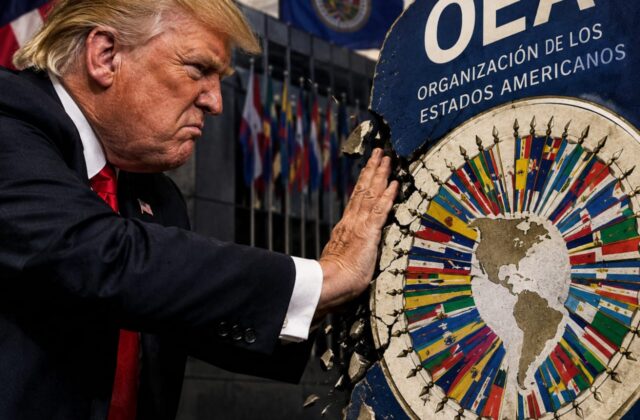
In his crusade to control the world and destroy the mechanisms of international governance created after World War II, Donald Trump has set his sights on Iran, with the aircraft carrier Abraham Lincoln and three warships equipped with Tomahawk missiles stationed near its coast. In our region, he’s targeting Cuba, which he has set out to suffocate without mercy.

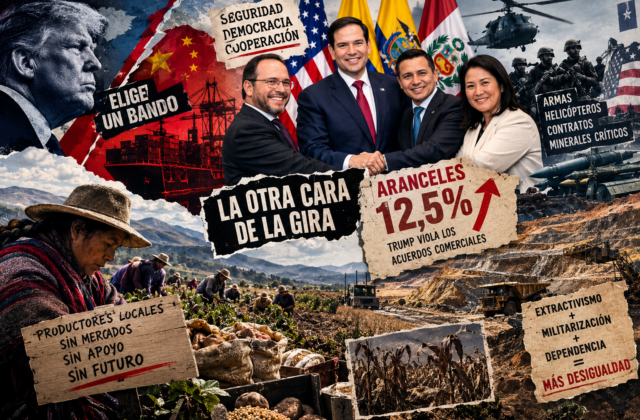
On Jan. 29, the U.S. president signed an executive order imposing tariffs on goods and services from countries that sell or provide oil to Cuba, arguing that aid to the island “constitutes an unusual and extraordinary threat to the national security and foreign policy of the United States.” Until Nicolás Maduro’s kidnapping, the oil consumed by Cuba came mainly from Mexico and Venezuela, which is essential for its electricity supply, 80% of which depends on oil.
A few days after the kidnapping of Nicolás Maduro and his wife, Cilia Flores, Trump warned on his Truth Social account that “Cuba lived for many years off large amounts of oil and money from Venezuela, in exchange for which Cuba provided ‘security services’ to the last two Venezuelan dictators, but not anymore! (…) There will be no more oil or money for Cuba! Zero!”
The U.S. government immediately increased pressure on the Mexican government, which sought to fill the void left by Venezuela in oil supplies to the island. The state-owned Petróleos Mexicanos (Pemex) suspended a shipment already scheduled for January. Without regular shipments from Venezuela, Mexico’s suspensions could lead to an increase in power cuts with serious consequences.
Venezuela
The radical shift in the political orientation of the government headed by Delcy Rodríguez, who governs with a gun to her head, has led to the suspension of oil shipments to Cuba. The government is moving steadily toward opening up its oil sector, as demanded by President Trump. On Jan. 29 the acting president formally signed into law the reform of the Organic Law on Hydrocarbons immediately after it was unanimously approved by the National Assembly.
Rodríguez said she was “really very excited” and that “this law bears the mark of Commander Chávez (…) and the vision of the future of President Nicolás Maduro.” Interestingly, the political figure who described the measure as “a big step” was Marco Rubio.
Washington immediately issued a general license lifting sanctions on some transactions involving Venezuelan oil. Trump ordered the release of Venezuela’s airspace, closed since he announced he would invade the country militarily, and American Airlines announced it would resume flights between the two countries after a seven-year hiatus under the sanctions.
The oil reform essentially reverses changes introduced in 2006 by then-President Hugo Chávez to increase state participation in oil revenues. At the time, it paved the way for significant social advances, such as massive housing construction projects and the so-called “missions” in health, education, among others. The new law will allow private companies to market oil, which was previously reserved for the state, and introduces the possibility that disputes be resolved “through alternative dispute resolution mechanisms, including mediation and arbitration.” In other words, it returns to the fold of the International Centre for Settlement of Investment Disputes (ICSID), a World Bank Group institution for resolution of disputes between states and foreign investors, generally in favor of the latter.

According to experts such as Carlos Mendoza Pottellá, who spoke recently at the conference “Venezuela: Oil Booty?” held at the Center for Studies on Socialist Democracy, the reform violates Articles 150, 151, and 302 of the Constitution and the National Assembly is left without the capacity to rule in this area, as a kind of helpless witness. The country’s sovereignty is seriously undermined. Mendoza notes that the original law took into account that Venezuela could not develop its oil resources on its own and allowed for negotiations with private companies without violating the Constitution. The current changes, he states, “are turning us into a new state of the United States or a colony under the command of Emperor Donald Trump and Captain General Marco Rubio.”
Once the law was enacted, President Rodríguez confirmed talks with Trump and Rubio to deepen binational ties. The U.S. Treasury Department lifted the sanctions on some Venezuelan oil commercial transactions to immediately allow U.S. oil companies to expand operations in he country.
As if the Venezuelan government currently had the power to decide the fate of its own oil, Foreign Minister Yván Gil rejected the executive order issued by Trump announcing the imposition of tariffs on countries that supply oil to Cuba. He said that “any measure that limits or conditions the exchange of goods and services, and the freedom of states to decide their trading partners in a sovereign manner, constitutes a violation of international law and the fundamental principles governing global trade.” He also said that “considering Cuba a threat to U.S. national security is nonsense that poses serious threats to its existence as a nation.”
He is absolutely right. But the Venezuelan government’s actions support exactly what he denounces.
The U.S. Secretary of the Department of Energy, Chris Wright, has indicated that the United States will control the sale of oil from Venezuela. The oil will be transported in storage vessels directly to unloading docks in the United States for an indefinite period of time, and the money resulting from these transactions will be deposited in accounts controlled by Washington. As if that were not enough, Vice President J.D. Vance stipulated that Venezuela will only be able to sell its oil if it benefits the interests of the United States.
Mexico
Since he took office a year ago, Donald Trump’s pressure on Claudia Sheinbaum, particularly regarding the intervention of the army in Mexican territory to combat drug trafficking, has intensified. Under pressure, the Mexican government still increased oil shipments to Cuba under the mantle of the Estrada doctrine and the Mexican Constitution. This, along with hiring Cuban teachers and doctors, deeply irritated the U.S. president for months.
Bloomberg reported Jan. 26 that the PEMEX shipment of oil to Cuba planned for January had been withdrawn from the schedule without revealing the reason for the suspension. Days earlier, Reuters had reported that the Mexican government was considering whether to continue sending oil to Cuba amid growing fears of retaliation from the United States. President Claudia Sheinbaum, faced with reporters’ questions, explained that the shipment was not a cancelled donation, but rather a decision made by Pemex, an autonomous company that makes decisions without her involvement. However, she confirmed that Mexican crude oil will no longer be sent to Cuba, at least for now.

The United States has blockaded Cuba so that the island can no longer receive oil tankers from anywhere in the world, except Mexico, despite Trump’s displeasure.
One oil tanker, the “Mia Grace” left Lomé, the capital of Togo in the Gulf of Guinea in Africa on Jan. 19 bound for Havana, and was diverted from its destination. Mexican crude oil only meets 40% of Cuba’s needs. With the suspension of oil exports from Mexico to Cuba, the U.S. government has paved the way to further suffocate the Cuban people and increase unrest.
On Jan. 30, Sheinbaum warned of a far-reaching humanitarian crisis in Cuba due to the tariffs imposed by Trump on countries that sell or supply oil to Cuba and said that her government will seek different alternatives to “provide humanitarian aid to the Cuban people, who are going through a difficult time, in line with what has historically been our tradition of solidarity and international respect.” She said that the tariffs announced by President Trump could “directly affect hospitals, food, and other basic services for the Cuban people.”
Given this scenario, the Mexican president instructed the Ministry of Foreign Affairs (SRE) to immediately contact the U.S. government to ascertain the precise scope of Trump’s order. Sheinbaum indicated that “it was also necessary to make it known that a humanitarian crisis for the Cuban people must be prevented.”
These are good intentions on the part of the Mexican president, who will have to stand up to a Donald Trump who has stated that Cuba represents an extraordinary threat to his national security and a Marco Rubio who has been obsessed for years with bringing down the Cuban government, which has been in power for six decades.
Behave yourself
Last week, the Secretary of State defended the military operation to arrest then-President Maduro before the Congressional Foreign Relations Committee. He reported that the January 3 operation had eliminated a major threat to national security in his hemisphere: “In our hemisphere, we had a regime led by an accused drug trafficker that became the base of operations for virtually all of the world’s competitors, adversaries, and enemies. For Iran, Russia, China, Cuba, and Nicaragua, Venezuela was their primary place of operations in the Western Hemisphere.“
Rubio reported on the agreement reached with the Venezuelan government regarding sanctioned oil that was previously barred from export: ”We will allow them to transport it to market at market prices, not at the discount China was getting. In exchange, the funds obtained will be deposited in an account that we will supervise so that the money is spent for the benefit of the Venezuelan people.“ He justified the measure by stating that it will be a short-term mechanism through which the Venezuelans present a monthly budget of funding requirements.
”We will tell them in advance what that money cannot be used for.” He added that the Venezuelan authorities have been very cooperative in this regard and have committed to using a substantial portion of those funds to purchase medicines and equipment directly from the United States.
Rubio praised the new hydrocarbons law for removing many of the Chávez-era restrictions on private investment in the oil industry. He concluded by saying that he was “hopeful that we will be better off than we would have been if Maduro were still there.”
Following the invasion and kidnapping of Maduro, the Venezuelan government has been forced to accept that the U.S. government now defines which countries it can and cannot trade with. Donald Trump’s growing threats to the Mexican president to suspend oil supplies now place the Cuban government and people in an extremely vulnerable position. As if nations were pawns in a chess game, Trump crowed that “after Venezuela’s energy lockdown,” Cuba will be on the verge of collapse. Secretary of State Marco Rubio stated, “if I were in Havana, I would be concerned, even if only a little.”
Trump’s corollary to the Monroe Doctrine aims at taking over the entire region, which he is effectively achieving with the complicit silence of the region’s governments, social organizations, and academic institutions.

“The World in Focus” is Ariela Ruiz Caro’s biweekly column for Mira: Feminisms and Democracies. Ruiz Caro is an economist with a master’s degree in economic integration processes and has worked as an international consultant on trade, integration, and natural resources with Economic Commission for Latin America and the Caribbean, the Latin American Economic System (SELA), and the Institute for the Integration of Latin America and the Caribbean (INTAL), among others. She has been an official of the Andean Community, an advisor to the Commission of Permanent Representatives of MERCOSUR, and Economic Attaché at the Embassy of Peru in Argentina.