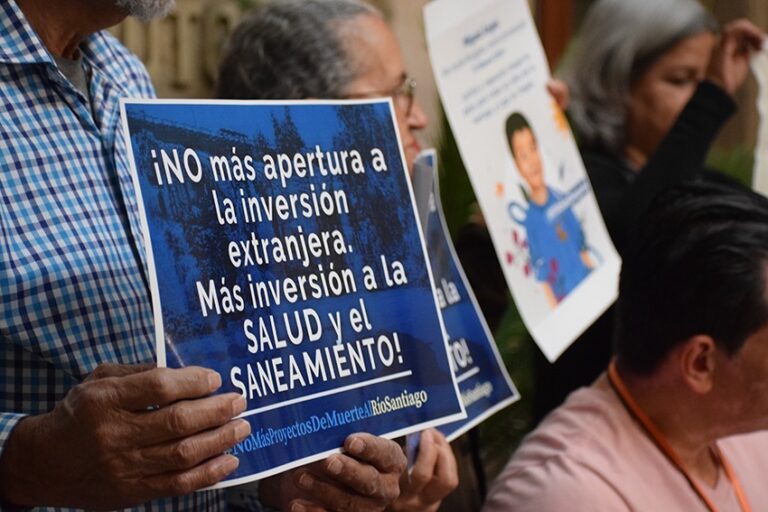
From Tragedy to Movement: Mexican Communities Fight Against “Sacrifice Zones”
By Tracy L. Barnett Seventeen years after 8-year-old Miguel Ángel López Rocha fell into the Santiago River and died from toxic poisoning, his death […]
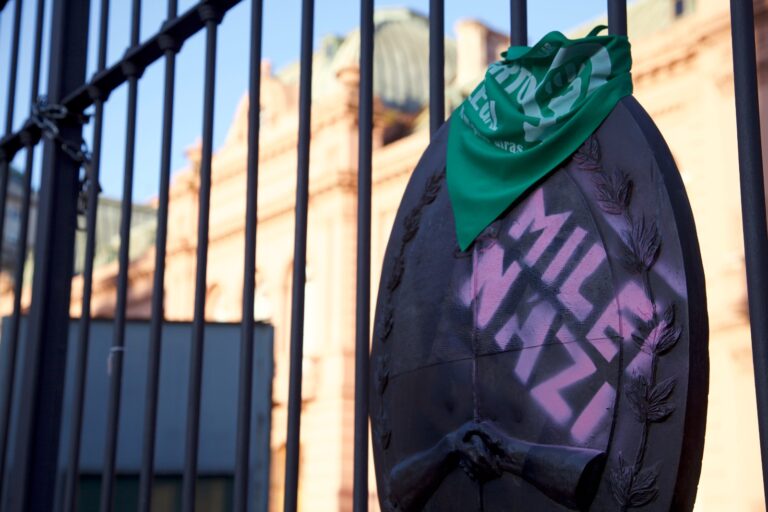
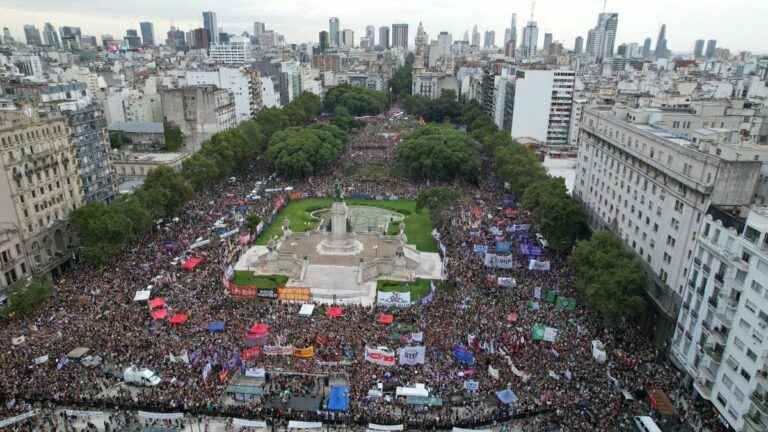
More than one million people protested and marched against President Javier Milei’s racist, anti-feminist and particularly anti-LGBTQI+ rhetoric on Feb. 1.
Laura Carlsen discusses how Claudia Sheinbaum will navigate a series of domestic challenges and a changing U.S.-Mexico relationship. In June 2024, Mexicans elected a […]
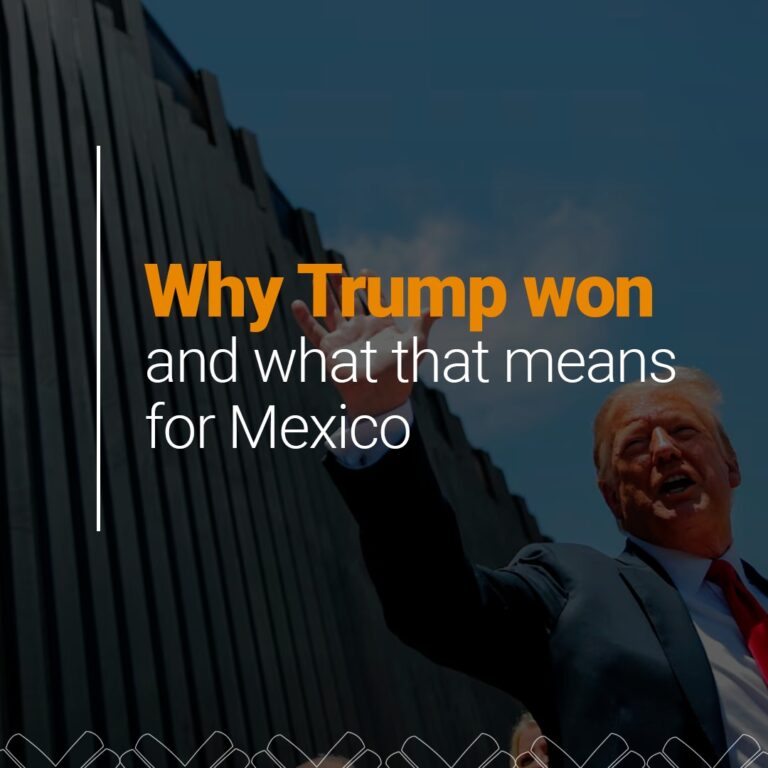
By Laura Carlsen Not only did Donald J. Trump win the US presidential against his Democratic rival Vice President Kamala Harris, he won every […]
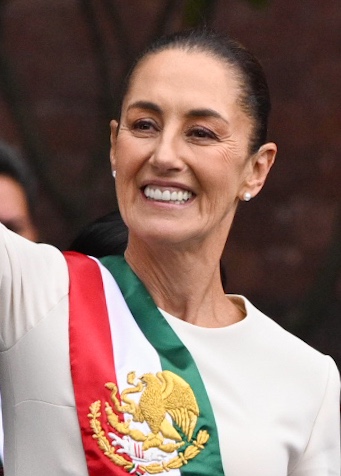
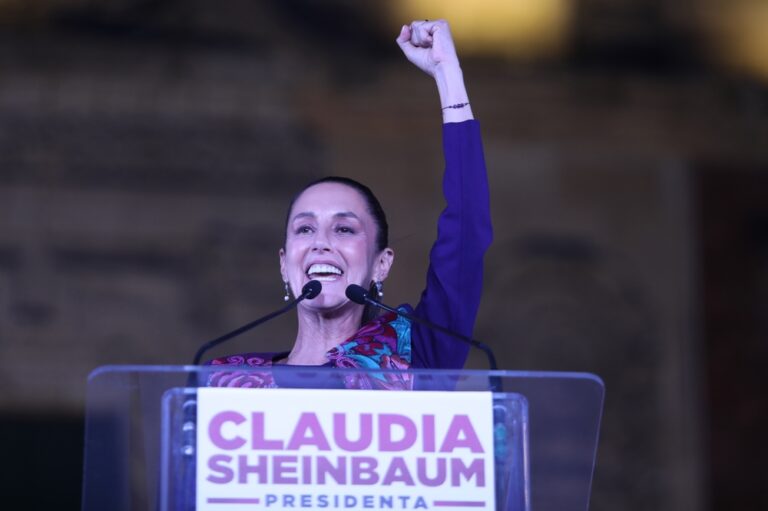
With the slogan “It’s time for transformation, it’s time for women!” and shouts of “Presidenta”, Claudia Sheinbaum took office October 1 after winning a landslide victory in Mexico’s presidential election on June 2. She defeated her closest rival, the conservative candidate (and also a woman) Xochitl Galvez, by a thirty-point margin and a vote count of 35 million—a record in the history of Mexican democracy.
About 21 million people become climate refugees annually, from the big storms and droughts, and by 2050, 1.2 billion people will be climate refugees. Thank the energy companies for most of that.
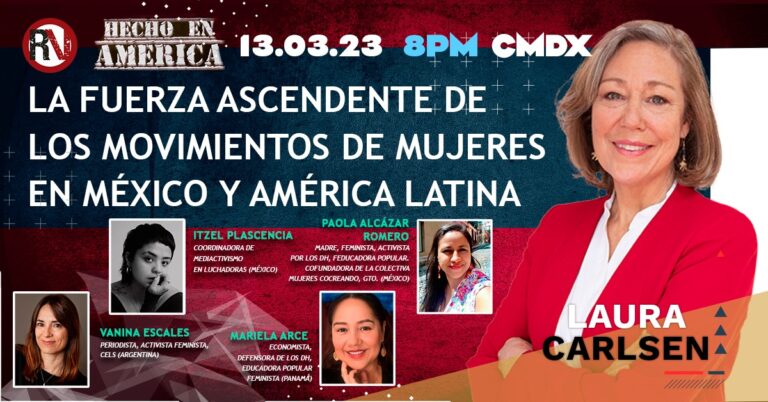
March 8, International Women’s Day (IWD), serves as a barometer of the strength of feminist and women’s movements, especially in Latin America where for years people have been mobilizing for women’s rights and women’s lives.
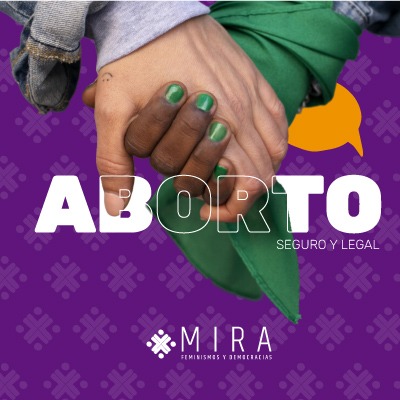
n this installment we present three country notes-Mexico, Argentina and Brazil-on advances and setbacks in access to safe and legal abortion in our continent. The different overviews remind us that while there are moments to celebrate as victories, these gains are not without setbacks, new obstacles or co-optation. The struggle for sexual and reproductive rights in Latin America is constant. That is why our movements are long term.
The main rally was at the Congress, where a document entitled “We were a tide, we will be a tsunami” was read, saying: “With this day of struggle we say that freedom is ours and not of the markets nor of the governments”.
We, feminists, celebrate, because however, we took another step, we advanced and with us, generations, hundreds of women and men, who will have ways out of the violence and will know that it is possible the trial, that so far away for us. We are because we are standing between hope and joy, survivors of terror and sometimes, only sometimes, we can feel something like justice.