
The World in Focus
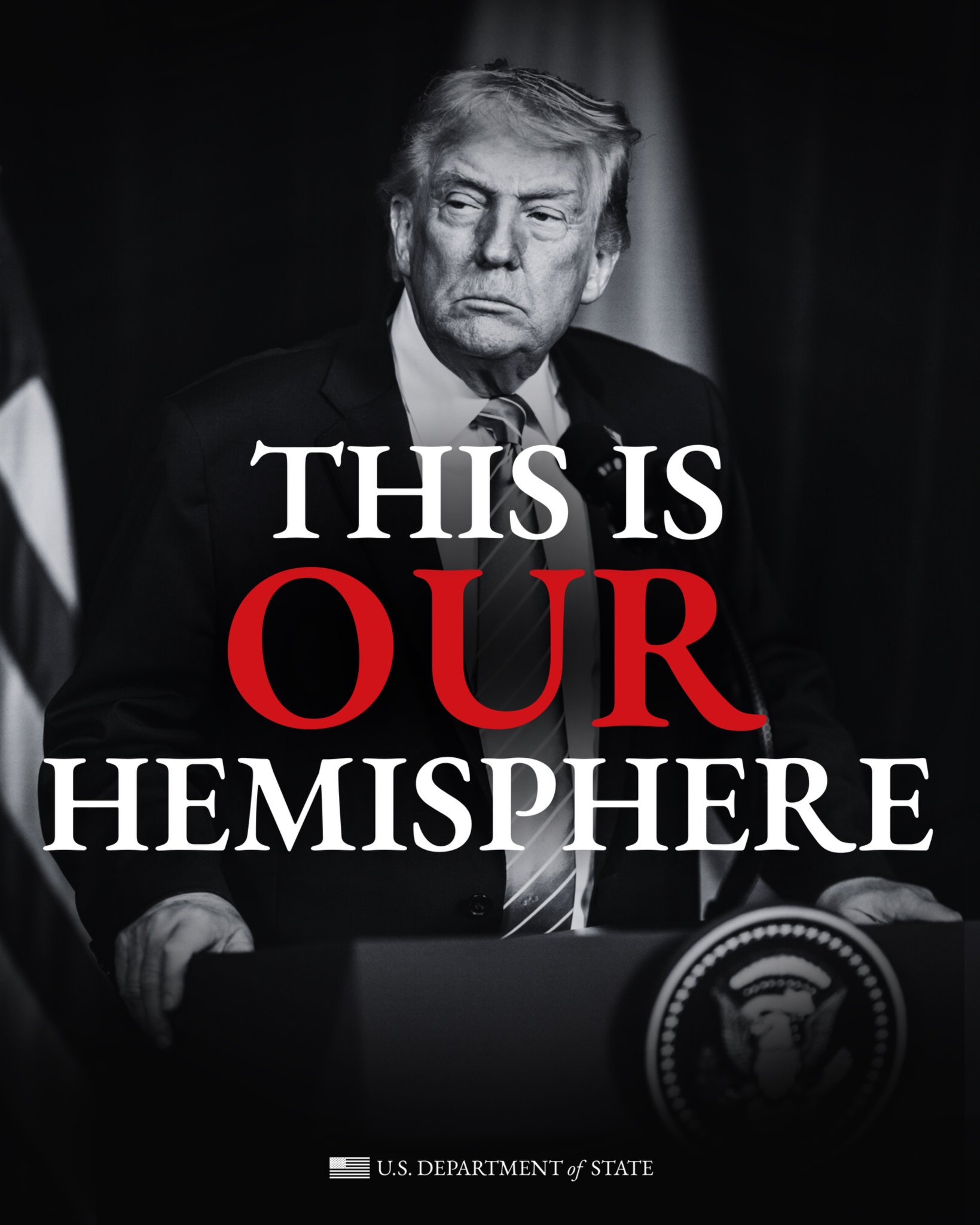
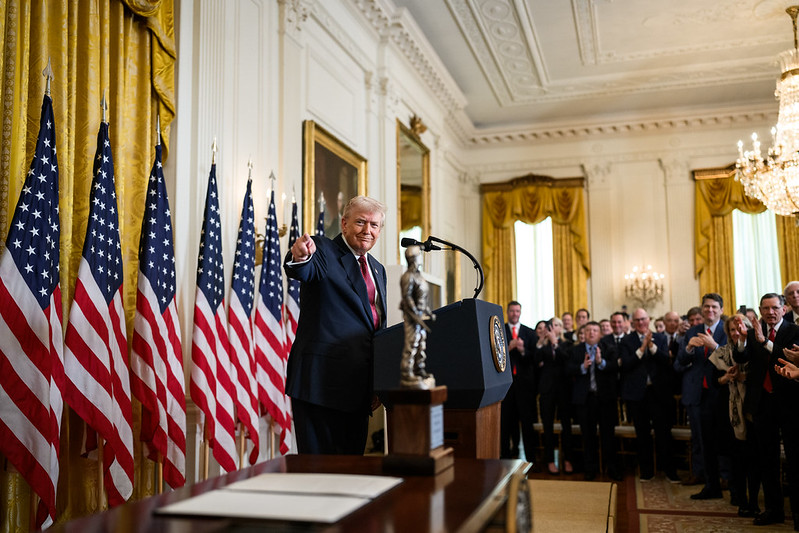
Donald Trump has his sights set on Latin America and the Caribbean and is prepared to use a heavy hand to bring them under his exclusive control. He called a presidential summit in Miami with heads of state he considers his ideological and strategic allies in Miami for March 7. The goal is to form a regional bloc aligned with Washington and strengthen strategic cooperation in security matters.
Trump announced that the group will promote shared development goals and democratic stability. The U.S. president also seeks to contain China’s growing influence in the region. So far, Presidents Javier Milei (Argentina), Santiago Peña (Paraguay), Rodrigo Paz (Bolivia), Daniel Noboa (Ecuador), Nayib Bukele (El Salvador), Nasry Asfura (Honduras), and José Jerí (Peru), whose removal from office for permanent moral incapacity is being debated in Congress four months after Dina Boluarte was removed and with just two months to go before the presidential elections in April.
Also this week, General Dan Caine, chairman of the Joint Chiefs of Staff, convened a Conference of Defense Chiefs of the Western Hemisphere in Washington to coordinate regional defense and security strategies with senior military officials from 34 countries in the region. At the event, held in Washington, D.C., attendees agreed on the importance of forming strong alliances, ongoing cooperation, and joint efforts to counter transnational criminal and terrorist organizations, and external actors that undermine regional security and stability.
China’s growing presence in the region in terms of trade, investment in infrastructure, technology, and natural resources is a central concern of the U.S. government. The U.S. “National Security Strategy” published in November 2025 explicitly states that the country must play a hegemonic role in the region, for which China’s presence must be displaced.
It’s my hemisphere
The first thing Secretary of State, Marco Rubio, did after Donald Trump took office on January 20, 2025, was to visit Guatemala, El Salvador, Panama, and the Dominican Republic. On the trip, he made it clear that the United States would continue to provide assistance to nations that aligned themselves with its national interests. It was the first time in more than 100 years that a Secretary of State had visited the Central American and Caribbean region on his first official visit abroad.
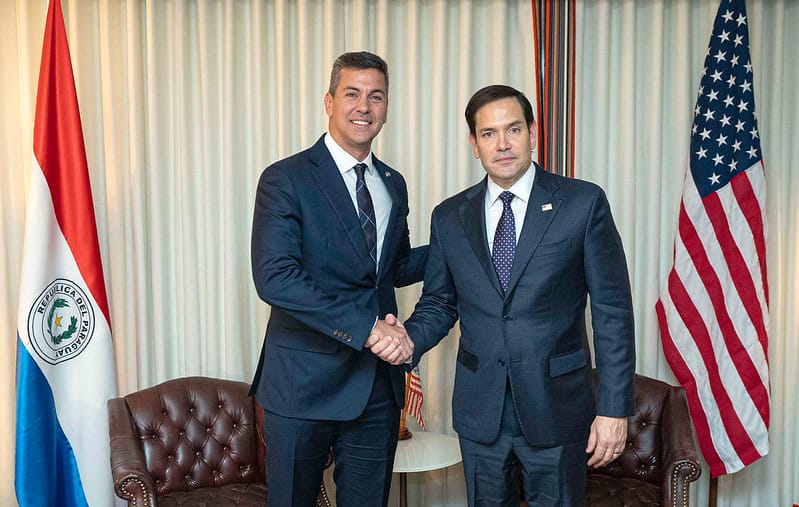
Panama´s government was forced to withdraw from the Chinese initiative for the modernization and interconnection of physical and digital infrastructure known as the Belt and Road Initiative (BRI). In April 2025, military exercises carried out since 2006 under the bilateral defense cooperation agreement known as Panamax-Alpha to protect the Panama Canal against transnational threats took on strategic relevance. Not only were they prolonged, but more special forces participated than in recent years. The exercise coincided with the Pentagon’s unprecedented military deployment in the Caribbean, which included the dispatch of warships, nuclear-powered submarines, and the giant aircraft carrier USS Gerald R. Ford, to overthrow the government of Nicolás Maduro and then suffocate the economy and civilian population of Cuba.
Washington has also expressed great concern over the construction of the Chancay megaport in Peru. Then-foreign minister, Elmer Schialer, and defense minister, Walter Astudillo, had to travel to Washington D.C. to meet with Defense Secretary Pete Hegseth. There, Hegseth warned them about Washington’s growing concern about China: “It represents a potential threat to hemispheric peace and security. We cannot ignore its covert expansion under the guise of development (…). Beijing invests to dominate, not to cooperate.”
In early May 2025, Marco Rubio told the leaders of the Eastern Caribbean (Saint Kitts and Nevis, Antigua and Barbuda, Saint Vincent and the Grenadines, Dominica, Grenada, and the Bahamas) to stay away from China because it was a “malign actor.” He claimed that China’s economic and cultural activities in the region are a threat to U.S. security and stated that the Caribbean nations must make “responsible and transparent” decisions about the suppliers and contractors they choose to build infrastructure so as not to be “vulnerable to privacy and security risks.” Rubio urged them to coordinate on security and information sharing through the Caribbean Basin Security Initiative, a security partnership between the United States and Caribbean nations established in 2010.
None of this prevented the Fourth Ministerial Meeting of the Community of Latin American and Caribbean States CELAC-China Forum from moving forward in Beijing that same month, where the US government’s threats to drive China out of the continent were not an issue. With the exception of Milei in Argentina, who obsequiously aligns with the Trump administration’s interests on everything, three Latin American presidents (Lula, Petro, Boric), and some 20 foreign ministers and senior representatives from 32 member countries of the region signed the Beijing Declaration and the CELAC-China Joint Action Plan for Cooperation in Key Areas (2025-2027). The plan coordinates actions on issues of interest to the parties involved. Even the slogan under which they gathered, “Planning together for development and revitalization, jointly building a Chinese-Latin American and Caribbean community with a shared future,” was disturbing to U.S. ears.
Then head of the Southern Command, Admiral Alvin Holsey, who resigned because of his disagreement with the bombing of boats in the Caribbean Sea), warned of the risks of China’s deployment in Latin America and the Caribbean and pointed out that its presence in the region involves “potential military programs.” Holsey seems to forget that the United States has military bases in almost the entire region, the oldest of which is located in Guantanamo Bay, Cuba.
A Chinese mega-port on the American continent
In November 2024, the mega-deepwater port of Chancay was inaugurated by Chinese President Xi Jinping and then-Peruvian President Dina Boluarte. From the outset, it raised alarms in the United States. The Trump administration cast it as part of a Chinese civil-military strategy that could house warships in a potential conflict. Located 70 kilometers north of the Peruvian capital, Chancay is one of the most ambitious infrastructure projects in Latin America, slated to be complemented by a bi-oceanic corridor between Brazil and Peru. This is part of China’s BRI infrastructure connection strategy in the context of China’s growing trade and investment in the region.
To counteract this presence, a few days before the port’s inauguration, Peru’s National Commission for Aerospace Research and Development and the U.S. National Aeronautics and Space Administration (NASA) signed a Memorandum of Understanding. This memorandum seeks to promote space cooperation, including the launch of sounding rockets from Peru starting 2028. In mid-January 2026, the U.S. Defense Security Cooperation Agency approved the supply of equipment and services worth $1.5 billion to modernize the new Callao Naval Base, very close to the mega-port. The main contractor would be the U.S. Army Corps of Engineers.
Ecuadorian president Daniel Noboa, another staunch ally of Washington, authorized the installation of a U.S. military base in the Galapagos archipelago in December 2024 to attempt to show his country’s intention to offset Chinese presence. The decision violated Ecuador’s 2008 Constitution, which contains an explicit prohibition on the presence of foreign military forces or bases on Ecuadorian territory. The most military base in that country dates back to 1999 in the coastal city of Manta. in 2009, then-President Rafael Correa did not renew the contract to operate that base. Noboa sent a partial reform of the Constitution to Parliament in March 2025 to eliminate the article prohibiting the presence of military bases. The reform was approved in early June, but in a popular referendum held in November 2025 61% of the population rejected the reform, thus nullifying it.
In recent days, the Chancay mega-port has been the subject of heated exchanges between China and the United States because the Chinese judiciary blocked the powers of the Peruvian regulatory body (Ositrán) over the mega-port and ruled that it should refrain from exercising its powers of supervision, control, and sanction, although it will regulate the setting of tariffs for end users.
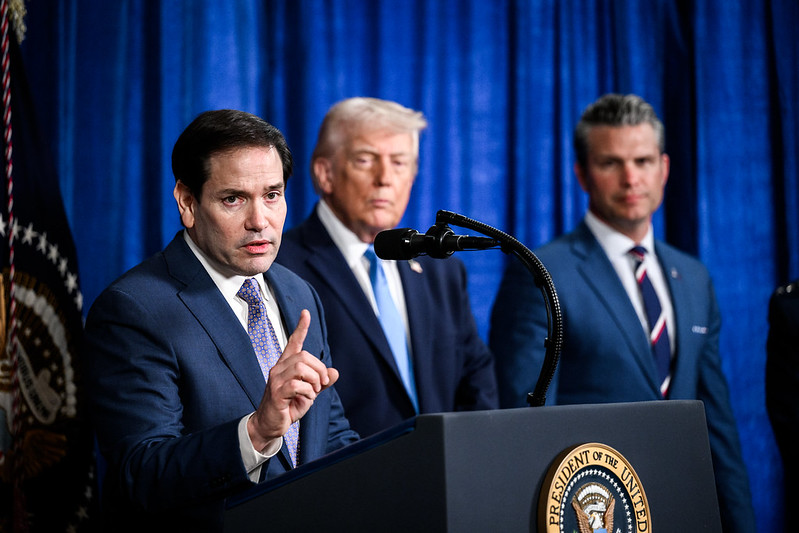
Immediately, the U.S. government, through the State Department, said it was “concerned” about the possibility that the Peruvian government would lose its powers to supervise the mega-port: “We support Peru’s sovereign right to supervise critical infrastructure in its own territory. Let this serve as a warning to the region and the world: cheap Chinese money costs sovereignty.” Minutes later, the U.S. ambassador to Peru, Bernie Navarro, echoed the message and added: “Everything has a price, and in the long run, cheap comes at a high cost. There is no higher price than losing sovereignty.”
On Feb. 12, the Chinese Embassy in Peru denounced the U.S. government’s statements on the Chancay port. It noted that Ositrán could note exercise supervision since port operations private and do not affect national sovereignty. Chinese Foreign Ministry spokesman Lin Jian spoke at a press conference and said that “China firmly opposes the false accusations and misinformation from the United States against China’s cooperation with Peru on the port of Chancay.”
The statements made by U.S. authorities constitute a clear interference in Peru’s internal affairs, especially since teh executive branch has no influence over the court rulings and much less over officials in other countries. The Peruvian regulatory body, Ositran, will appeal the ruling.
Retaking the Panama Canal
Since Donald Trump took office, he has repeatedly expressed his desire for the United States to regain control of the Panama Canal. He has pressured Panamanian authorities to withdraw from the Belt and Road Initiative and to terminate the contracts of Hong Kong-based CK Hutchison, which operates the ports of Balboa and Cristobal at both ends of the canal.
He succeeded. At the end of January, a Panamanian court ruled that the contract with CK Hutchison was unconstitutional, which has angered both CK Hutchison and the Chinese government. CK Hutchison has announced it will take the case to international arbitration and warned that Panama will pay the consequences.
Even though he knows that the canal is controlled by a Panamanian public entity, Trump has cynically accused China of controlling the canal. The pressure led CK Hutchison to initially propose selling the two Panamanian ports to a consortium of investors led by BlackRock, the world’s largest asset manager. The announcement thrilled Trump, who, with his characteristic humility, linked the decision to his efforts to return control of the Panama Canal to the United States:
“My administration will take back the Panama Canal, and we have already begun to do so (…) Just today, a great American company announced that it is going to buy the two ports surrounding the Panama Canal,” he crowed. But the Chinese government opposed the deal, and CK Hutchison announced that it was considering inviting another investor, likely COSCO, the Chinese state-owned shipping giant, to participate in the operation, which revived Trump’s anger.
The US president has falsely accused Panama of allowing Chinese soldiers to control the sea route and of overcharging U.S. ships, which is absolutely untrue. “There are no Chinese soldiers in the canal, for God’s sake,” said a frustrated President Mulino in December of 2024.
Trump has said that if fees fir U.S. vessels are not reduced, he will demand that the United States be given control of the canal “in its entirety, quickly and without question.” French historian David Marcilhacy and others have argued that Trump’s accusations that Panama is not respecting neutrality due to alleged Chinese influence have no legal basis.
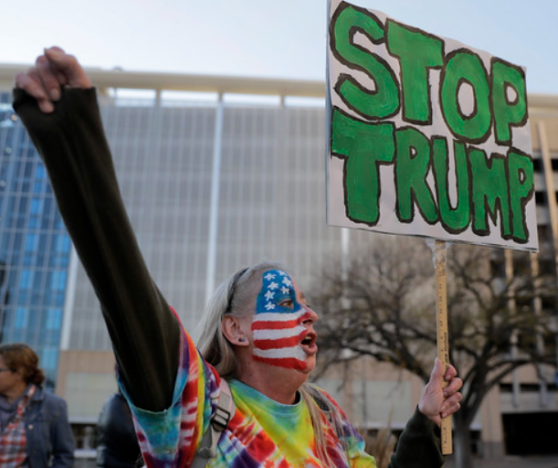
Recent acts of interference by the U.S. government in Peru and Panama come on the heels of the interference in Brazil, in connection with the 27-year prison sentence handed down to former President Jair Bolsonaro for leading a coup attempt after being defeated at the polls in 2022 elections. On that occasion, Trump openly criticized judicial leaders and imposed tariffs of up to 50% on a significant portion of Brazilian exports to the U.S. market.
Shortly thereafter, the trial of former Colombian President Álvaro Uribe for procedural fraud and witness tampering that resulted in a sentence of 12 years under house arrest sparked angry protests from Secretary of State Marco Rubio, who railed against the Colombian justice system ad defended Uribe, who was also accused of having close ties to paramilitary groups. Add Trump’s blatant interference in the midterm legislative elections in Argentina last October by asserting that Argentines should vote for the ruling party’s candidates if they wanted to continue receiving loans, and in the presidential elections in Honduras on November 30, when Donald Trump threatened cutoffs in aid if Hondurans did not vote for Nasry Asfura, now president of Honduras. That election was accompanied by Trump’s pardon of former Honduran President Juan Orlando Hernández, sentenced to 45 years in prison for drug trafficking in the United States, who belongs to the same party as Asfura–the conservative National Party.
With an interventionist government like Trump’s, and with the region in the spotlight, the right to self-determination and defense of sovereignty in the countries of the region are being seriously violated.
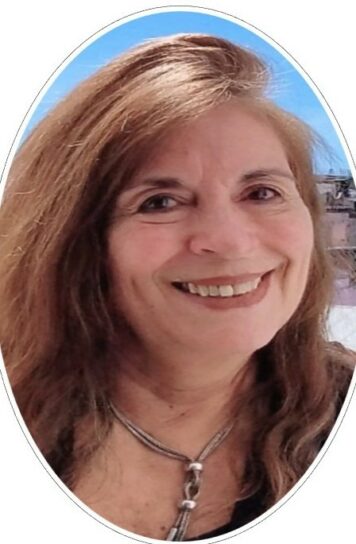
The World in Focus” is Ariela Ruiz Caro’s biweekly column for Mira: Feminisms and Democracies. Ruiz Caro is an economist with a master’s degree in economic integration processes and has worked as an international consultant on trade, integration, and natural resources with Economic Commission for Latin America and the Caribbean, the Latin American Economic System (SELA), and the Institute for the Integration of Latin America and the Caribbean (INTAL), among others. She has been an official of the Andean Community, an advisor to the Commission of Permanent Representatives of MERCOSUR, and Economic Attaché at the Embassy of Peru in Argentina.