October 5, 2023 Feminismos

Semillas mayas contra el monocultivo feminista

En su libro Respondona, bell hooks habla de cómo con frecuencia “las mujeres feministas (muchas de las cuales son blancas) dicen que quieren oír hablar a mujeres que hasta ahora no han tenido voz, pero no siempre quieren oír lo que tenemos que decir”. Sus palabras me lanzan flashes del pasado en los que feministas de marca registrada hicieron comentarios respecto a mi cultura e, independientemente de si querían oír mi voz o no, yo no pude responderles porque no lograba articular por qué estaban equivocadas. Mi voz estaba afónica. 

Una de esas veces fue una actriz de Hollywood, cuyo nombre no es importante para este artículo, que fue a la ciudad donde vivo para hacer un documental sobre la historia de las mujeres de aquí. Trabajé en la producción de las historias y le presenté a un grupo de pescadoras que estaban transformando su comunidad al mostrar que las mujeres también podían dedicarse a la pesca. Pareció encantarle la idea pero cuando las vio acercándose con hombres ayudándoles a transportar los alijos me miró contrariada preguntándome por qué si ellas eran las pescadoras, trabajaban con hombres. 
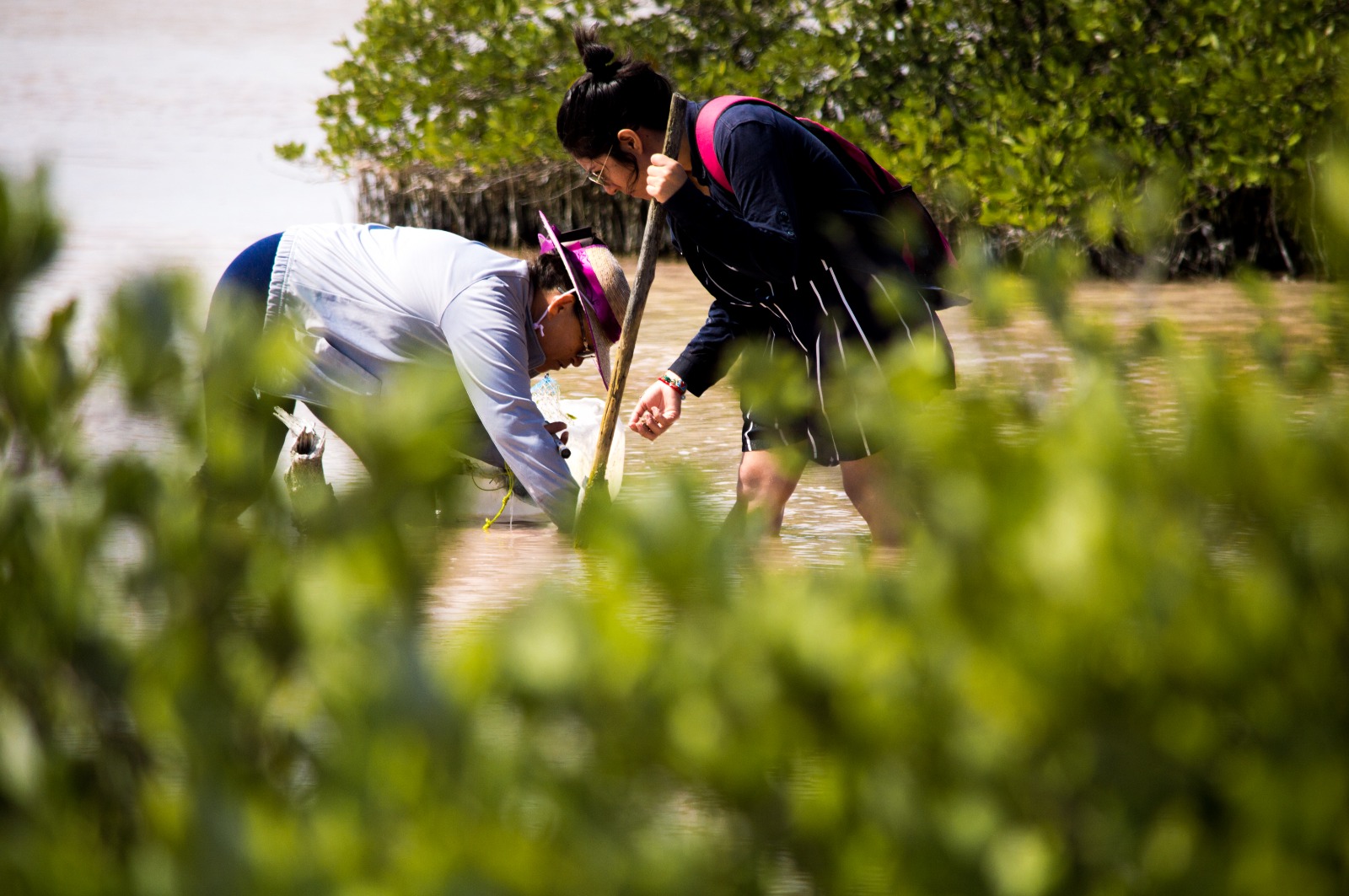
Mujeres en Yucatán trabajan en la pesca. Foto: Jafet Kantún

Quise explicarle la importancia de estas mujeres: que ellas eran las líderes de la cooperativa, que habían conseguido independencia económica para otras mujeres de la comunidad y que sacaban adelante a sus propias familias. El hecho de que niños y hombres les ayudaran a realizar ciertas tareas manuales no hacía menos su liderazgo. Quise decirle que en las comunidades racializadas el separatismo no era siempre una estrategia viable y que en ese lugar la base del pensamiento era comunal. Pero me quedé callada porque -aunque en mi cabeza tenía la noción- no sabía cómo decirlo y mucho menos en inglés; porque ella no hablaba español.  

Fueron días de oír discursos feministas “interseccionales” a chorros, de escuchar en inglés sobre “el cruce de miradas y culturas”, pero toda su percepción de la realidad era unilateral. Ella, que había ido a conocer y documentar una realidad distinta, se mostró decepcionada al no recibir lo que se había imaginado. Y es cierto que una ya no espera nada del feminismo blanco hippie buena ondita pero lo que realmente caló en mí fue mi imposibilidad para hablar y describir mi realidad. 

Por qué el feminismo interseccional no alcanza

Aunque comprendo que existe una diferencia entre el feminismo blanco disfrazado de interseccionalidad y el “verdadero” feminismo interseccional, no creo que el feminismo interseccional incluya todos los movimientos liderados por las mujeres. Así como los hombres tienen la posibilidad de liderar otros movimientos que no tengan que ver con su género, las mujeres también somos capaces de elegir los movimientos que queremos construir. Decir que el feminismo interseccional abarca todos ellos es una mentira cuando esas luchas no ocupan un lugar en los estantes feministas de libros, documentales, películas o conversaciones cotidianas.

En la perspectiva interseccional se apunta a la necesidad de analizar una vida en relación de todas sus partes, pero muchas veces en el feminismo ha tenido una aplicación más bien globalizante: junta, mezcla y reduce a las mujeres como si fuésemos un grupo homogéneo.

Sí, tiene la buena intención de entender a las mujeres desde las diferencias, pero sigue poniendo el género en el centro y eso es un sesgo en sí mismo porque para muchas mujeres la primera opresión no está en el género o es indivisible de las otras.

Hay razones capitalistas y blancas por las cuales en el imaginario colectivo tenemos una mejor noción de lo que significa patriarcado a lo que significa racismo ambiental. Por algo se llama feminismo interseccional y no antirracismo interseccional. 

Aura Cumes, investigadora y escritora maya kaqchikel, ha explicado por qué las premisas universales del feminismo no calzan con la realidad de muchas mujeres mayas: 

“Amigas feministas me decían: Aura, tú primero eres mujer y después eres maya. Y nos enredábamos en esas discusiones que para mí no tenían sentido (…) Quien está priorizando un nivel de la lucha es que está hablando desde un lugar, está haciendo política desde un lugar y está haciendo academia desde un lugar. Las personas que están luchando porque son mujeres no están siendo amenazadas de que su pueblo va a ser exterminado, de que se van a llevar el río, porque hay una seguridad de condiciones que le permiten decir ahora lucho por ser mujer, pero en el caso de las mujeres indígenas y las mujeres rurales no”.

Aura Cumes

Yo soy de Yucatán y, aunque crecí adormecida en la asimilación de la clasista y blanca ciudad de Mérida, mi familia paterna es maya. No tengo resueltas las reflexiones sobre mi identidad pero intuyo -y he escuchado que otras lo intuyen también- que el feminismo interseccional más interseccionalísimo de todos sigue quedando corto para mujeres mayas o mayadescendientes.

Porque sigue privilegiando la condición de ser mujer sobre cualquier otra vivencia “extra” que se diluye en la palabra interseccionalidad. Me da las mismas vibras que el concepto “pueblos indígenas” que usa el Estado Mexicano para hablar de 68 culturas, para construir una “nación artificial” como lo ha dicho la lingüista, escritora, traductora e investigadora ayuujk, Yásnaya Aguilar. 

Aguilar también ha dicho que sí hay cosas en común en esos pueblos, pero la mezcla que las reduce no permite que en el imaginario se distingan las diferencias medulares. Eso es el feminismo interseccional: una manera de abarcar todo sin tomarnos la molestia de desmenuzar cada una de las partes. No pueden incluirnos si todavía no nos han escuchado, y no nos pueden escuchar si no articulamos las palabras, si no ensayamos la voz, si no aprendemos a usarla.

Sé que es difícil determinar qué lucha es más importante para una cuando el capitalismo, el racismo y el patriarcado funcionan de manera tan articulada. Pero en esta búsqueda de mi voz, de mi centro, soy consciente de que el racismo y el clasismo le quitaron al pueblo maya la identidad, la memoria y le arrancaron la lengua. Mi padre solía escuchar a su mamá hablar maya con su abuela en secreto, yo lo escuché a él algunas veces cantando en maya. A mí me quedan los retazos en un idioma mestizo y sobre esa lengua malix reconstruyo mi voz porque ya no estoy dispuesta a que me quiten nada más.

La teoría y el feminismo silvestre 

Hace un tiempo la imagen de “A tu teoría le falta calle” recorrió las calles hacinadas de internet. Yo fui una de las usuarias que la compartió con una sonrisa de ¡por fin alguien lo dice! y volví a hacerlo cuando me topé con la imagen mejorada: “No te falta calle, te falta campo”. Y pensé en todos esos conceptos abstractos que había aprendido en la milpa de mujeres organizadas, en los foros de pueblos mayas de la Península de Yucatán y de pláticas de sobremesa con mujeres mayas. 

Todas esas experiencias cambiaron radicalmente mi manera de ver la vida y de verme a mí misma como ningún libro de teoría había podido hacerlo. Y creí, erróneamente, que como esas palabras no habían sido publicadas por la academia, la teoría no hacía falta. Hasta que escuché una charla de la antes citada Aura Cumes Simón, en la que hablaba sobre la necesidad de ser sujetas epistemológicas, o sea, protagonistas y autoras de teoría: 

“Hemos colocado la respuesta política de que las mujeres indígenas no solo somos seguidoras de los movimientos de mujeres, de género o feministas sino que somos sujetas epistémicas, es decir, desde nuestra experiencia creamos conocimientos, ejercicio y horizonte político. Somos al mismo tiempo muchas cosas”. 

Aura Cumes

Las mujeres mayas interesadas en estructurar el pensamiento de género y antirracista contemporáneo con perspectiva cultural existen y esa debería ser razón de sobra para no minimizar la teoría ni separarla de la práctica. Ese pensamiento dual y separatista, como lo dice bell hooks, también es una mirada colonial. A diferencia del pensamiento maya, por ejemplo, en el que todo está conectado.

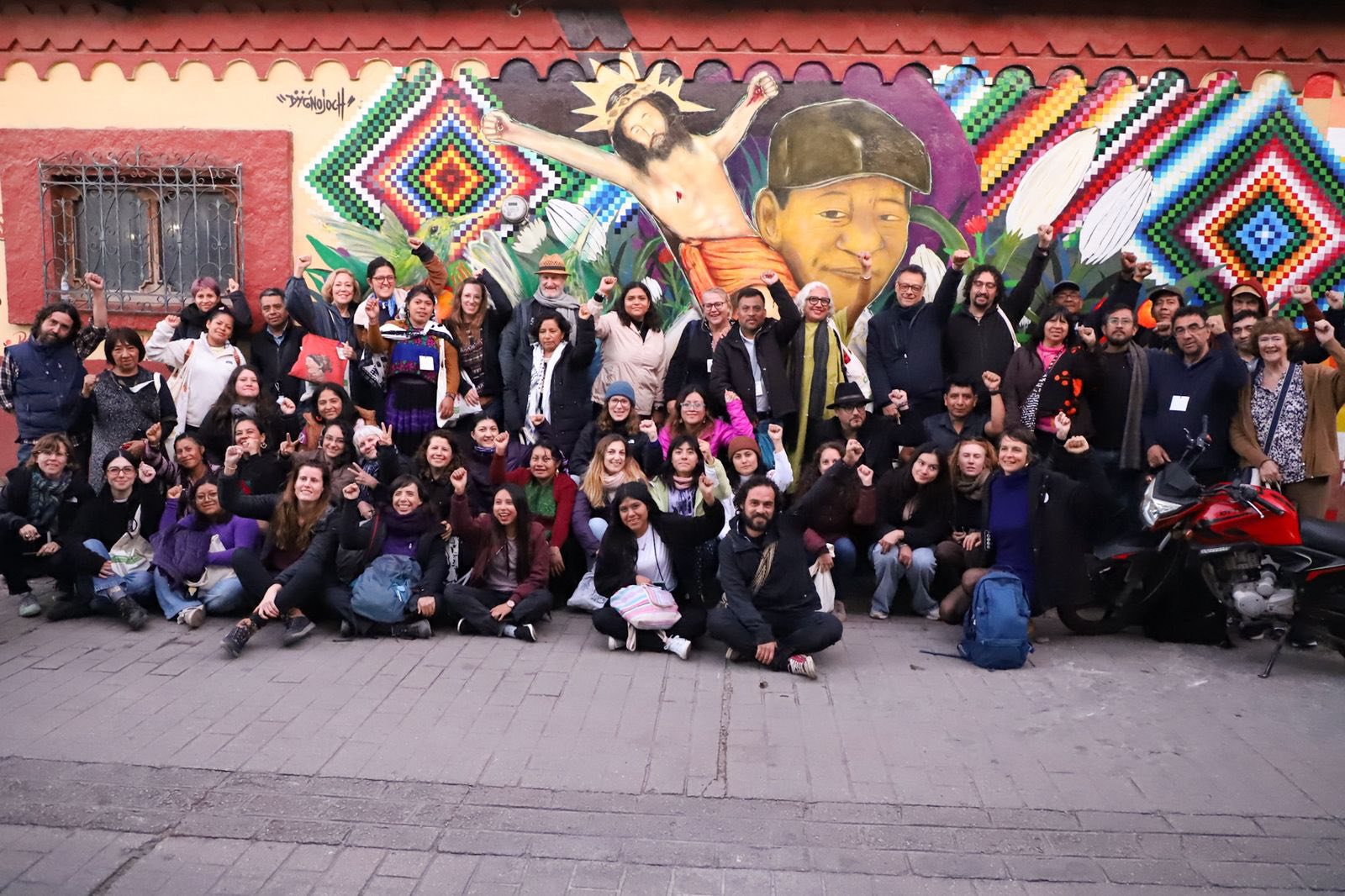
En un encuentro internacional realizado en marzo de 2023 en el pueblo de Sotuta, Alika Santiago, quien se describe como una feminista silvestre “porque su feminismo creció solo, como crecen solas las plantas, flores y hierbas en donde quiera que haya tierra”, habló sobre el óol. Una voluntad de vida que depende del equilibrio espiritual, mental, vínculos sociales y el vínculo con la tierra, la lectura de todo en relación con una misma. Un bienestar que va más allá de lo económico, lo social y lo intelectual, donde no hay luchas separadas sino vínculos que se rompen. 
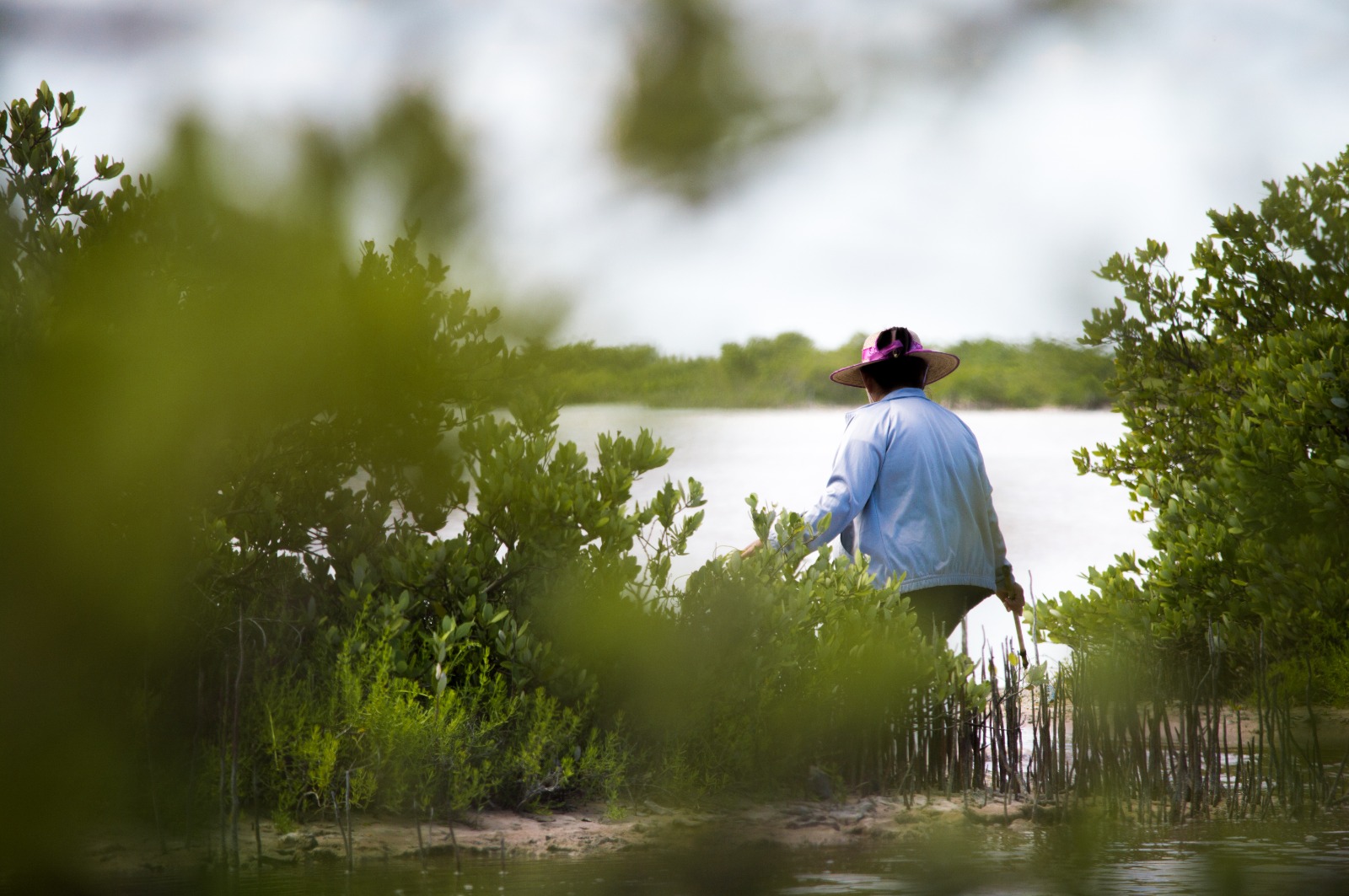
Mujer en pesca. Foto: Jafet Kantún

K-luumil X’Ko’olelo’ob, la colectiva de la que forma parte, ha tomado la postura política de remontarse a los cuidados como una forma de complementar la lucha que otras mujeres lideran para la defensa del territorio y concentrarse en el trabajo con mujeres. Hizo una crítica a la lógica patriarcal “que ha sido sangrienta y dolorosa para hombres y mujeres”, pero también recalcó la importancia de cambiar las violencias aprendidas por el propio pueblo maya: 

“Vivimos en una comunidad maravillosa desde nuestra cosmovisión maya pero aún en nuestra cosmovisión hay muchas violencias y tenemos que hablarlas. Sí, lo que nuestras abuelas y abuelos heredaron nos mantienen y está vivo hoy, pero también hay que sembrar nuevas semillas. Alguien lo tiene que hacer, tenemos que encajar como se complementan las arañas y las abejas”. 

Alika Santiago

En ese conversatorio también estaba Leydy Pech, guardiana de las abejas, con sus compañeras de la colectiva de mujeres mayas Muuch Kambal. Como yo iba a moderar su charla, me presenté antes de comenzar e intenté transmitirles, no sé por qué, que en ese lugar donde había personas de todos los continentes, yo era peninsular. Leydy Pech me miró con curiosidad y me preguntó si yo era la ceibita de la que había oído hablar. No era yo, pero guardé la abstracción de hablar de la Ceiba, un árbol sagrado, para describir a una persona que crecía en solitario, a la que había que hacer sombra. Y recordé otros conceptos como “monocultivo mental”, una frase que escuché de Arnauld García, biólogo que trabaja sistemas agroforestales en Sotuta, para hablar del peligro de pensar con una base monolítica sin nutrirse de otras ideas. 

Escuchando a las maestras sembradoras hablar de su experiencia acompañada de reflexiones profundas sobre identidad, colonialismo, racismo y extractivismo, sentí por fin la potencia de converger el hueso con la carne.

La teoría y la práctica con una voz propia, un lenguaje común y a la vez inédito: monocultivo mental, ser ceiba, florecer en la sequía, ir juntas como las abejas. Mujeres hablando de cuidados y de solares, redefiniendo conceptos sin dividir teoría y campo, poniendo al centro a las mujeres sin olvidar que la base está en lo comunal. 

Existen movimientos de mujeres en el mundo que no se nombran feministas y que no tendrían por qué utilizar un concepto con el que no se identifican, a pesar de los esfuerzos por universalizarlo, pero también existen mujeres que han resignificado la palabra “feminista” para llevarla a sus luchas a partir de sus contextos. Además de Alika Santiago, está Yamili Chan del proyecto familiar de género y medioambiente U Yich Lu’um en el municipio de Sanahcat, también en Yucatán.

Yameli Chan me dijo que cuando se hablaba en maya, el idioma que habla el 23% de la población yucateca, ser o no feminista pasaba a segundo plano porque no son conceptos que se utilicen en esa lengua. Para ella era revolucionario llamarse feminista pero entendía que para otras no y eso no significaba que las reflexiones sobre violencia sexual o familiar no estuvieran presentes en las mujeres de la comunidad. 

Sí, a la teoría le hace falta barrio, campo, mar, cenote, terrenos de uso común y posiblemente hasta un jardín recreativo, pero hasta el monte se alimenta de teoría. 

La identidad no es una propiedad privada 

En esta diversidad de opiniones silvestres están también las activistas y pensadoras antirracistas que satanizan al feminismo y todos sus apellidos. No comparto esta crítica absoluta porque deslegitima las reapropiaciones del término; y estigmatiza a feministas que mantienen un diálogo cercano con mujeres que lideran otras luchas sin la pretensión de bautizar como feminismo a una lucha diferente. A este tipo de críticas también lo llamaría monocultivo mental (si nos organizamos, lo volvemos pop): No hay necesidad de escoger uno u otro; las luchas podrían converger en un mismo territorio como convergen las sandías con los chiles habaneros, el maíz y las plantas medicinales en un mismo solar sin desenraízar ni interrumpir sus ciclos entre sí. 

En términos generales estoy de acuerdo con las críticas de hacer política basada únicamente en la identidad. Particularmente en la Península de Yucatán el borrado de los conocimientos mayas viene acompañado de un despojo de la identidad para explotarla a través del turismo y la cultura oficialista. Los gimnasios, los hoteles, los festivales, los megaproyectos que despojan al mismo pueblo tienen nombres en la lengua o simplemente se les agrega “maya” a lo que es cínicamente blanquitud. 

En ese contexto, la conformación de una voz colectiva que hable de sus problemas específicos, con sus propias palabras y formas de entender el mundo es indispensable para la resistencia cotidiana, las estrategias de cuidado y lucha y la siembra de un futuro que se parezca más al mundo que imaginamos y no que se nos impone. Pero no podemos quedarnos solo en el diálogo entre iguales.   

La escritora y radiolocutora yucateca Alf Bojórquez, cuyo programa de radio Un sueño largo, ancho y hondo ha sido un antídoto para mi pensamiento monolítico (ella le llama a la contraparte pensamiento collage), dice que: “El mundo se mantiene intacto cuando se reclama cualquier identidad o representación sólo por beneficio individual. Lo político comienza cuando nuestras vivencias se colectivizan y dejamos de reproducir el mundo actual. Es decir, empieza donde se acaba la propiedad privada del yo”.

Por eso empecé a leer sin detenerme en las credenciales identitarias de autoras y autores que escriben sobre temas que me interesan. Leer a mujeres negras me ha servido de mucho para conectar reflexiones con mis propias vivencias, aunque no sean exactamente lo que vivo. Por ejemplo, durante muchos años me llamó la atención los discursos alrededor del cabello afro y cómo se había reivindicado su belleza y sus cuidados. Un día mi papá me platicó sobre momentos en los que se sintió discriminado por tener el cabello kixpol (un tipo de cabello lacio, grueso y rebelde que suele relacionarse con personas de origen indígena) por el cual ha usado gorra desde que tengo uso de razón. Quizá si yo no conociera las narrativas de reivindicación del cabello afro, hubiera sido más difícil comprender la violencia estética que viven las personas de cabello kixpol. Y si mi papá no me hubiera contado esa historia, yo no habría podido trasladar ese conocimiento a mi realidad. 

Si el feminismo interseccional es lo que viene siendo un xe’ek en Yucatán (una ensalada de frutas, chile y limón) ¿cuáles son las frutas que la componen? Si no podemos nombrarlas, ¿realmente tenemos la receta? ¿lo hemos probado siquiera alguna vez? Dejemos de fingir que somos antirracistas porque hemos leído a algunas mujeres negras. Conozco personas que se sabrán de memoria el poema ¿Acaso no soy una mujer? de Sojourner Truth y que tienen una estructura mental tan sofisticada que pueden detectar prácticas racistas hacia la población afrodescendiente pero al mismo tiempo consideran a los pueblos originarios como un moloch (grupo) de personas que tienen en común la pobreza. También conozco feministas que creen que una conversación con una persona maya en un espacio rural será de un nivel inferior o menos emocionante que el que tendrían con una graduada de la UNAM, y que jamás contemplarían seriamente tener una relación amorosa con un hombre indígena porque los consideran casi naturalmente violentos. 

Es tan importante contar las experiencias que no se ajustan a lo que se ha dicho de racismo, clase y feminismo cómo dialogar con aquello que no forma parte de nuestra identidad porque nutre. Hay plantas en el solar que sirven solo para que otras plantas crezcan, otras que no son semillas endémicas pero que “pegan” al suelo como si lo fueran. 

Las lecturas de otros mundos pueden ser una linterna para mirar con nuevos ojos el nuestro. ¿Cómo estamos leyendo en el sur de México esas ideas? ¿Qué nuevas semillas podemos sembrar a partir de esas otras experiencias que parecen lejanas? Porque no es lo mismo leer a Angela Davis en el sofá de un estudio lleno de libros que en mi hamaca mientras escucho los petardos del gremio en el pueblo. ¿Cómo respondemos a ese diálogo desde nuestro contexto? 

El racismo se manifiesta de maneras muy distintas como el feminismo se multiplica, se reinventa y se disfraza. Una visión realmente diversa, un cultivo rico de ideas necesita nuevos nombres, palabras, conceptos y bases de pensamiento, y algunas mujeres de estatura pequeña y vestidos ligeros están sembrándolas. 

Katia Rejón Márquez (Campeche, 1993) Periodista y escritora. Cofundó la revista Memorias de Nómada y el podcast Fugitivas mx. Escribe de medioambiente, antirracismo, género y cultura.

October 5, 2023 Feminisms

Mayan seeds against feminist monoculture

In her book Talking Back, Feminist Thinking, Black Thinking, bell hooks talks about how often ‘feminist women (many of whom are white) say they want to hear women who until now haven’t had a voice, but they don’t always want to hear what we have to say.’  Her words sent flashes of the past when pedigreed feminists made comments about my culture and, regardless of whether they wanted to hear my voice or not, I couldn’t respond because I couldn’t manage to articulate why they were wrong. My voice went mute.

One of those times was with a Hollywood actress, whose name isn’t important here, who came to the city where I live to make a documentary about the history of women here. I worked on the production of the stories and introduced her to a group of fisherwomen who were transforming their community by showing that women could also make a living to fishing. She seemed to love the idea, but when she saw them approaching with men who were helping to carry their stuff, she looked at me disgusted and asked me why, if they were a group of fisherwomen, they were working with men.

Women in Yucatán work in fishing. Photo: Jafet Kantún

I wanted to explain the importance of these women, that they’re the leaders of the cooperative, that they’ve achieved economic independence for other women in the community, and that they’re raising their own families. The fact that boys and men helped them perform certain manual tasks doesn’t diminish their leadership. I wanted to tell her that in racialized communities, separatism isn’t always a viable strategy and that here the fundamental logic is communal. But I remained silent because, even though I had the thought in my head, I didn’t know how to say it (much less in English, because she didn’t speak Spanish).
Those were days when it seemed we were hearing “intersectional” feminist discourses everywhere, hearing in English about “sharing views and cultures,” but her entire perception of reality was one-sided. She, who had come to discover and document a different reality, was disappointed at not finding what she had imagined. And although one no longer expects anything from cool, hippie, white feminism, what really stuck with me was my own inability to speak up and describe my reality.

Why intersectional feminism is not enough

While I understand that there is a difference between white feminism disguised as intersectionality and “true” intersectional feminism, I do not believe that intersectional feminism includes all women-led movements. Just as men have the possibility of leading other movements that have nothing to do with their gender, women are also capable of choosing the movements we want to build. To say that intersectional feminism encompasses all of them is a lie when those struggles do not occupy a place on the feminist shelves of books, documentaries, films or everyday conversations.

The intersectional perspective points out the need to analyze a life in relation to all its parts, but many times in feminism it has had a somewhat globalizing application: it brings together, mixes and reduces women as if we were a homogeneous group. Yes, it has the good intention of understanding women from their differences, but it continues to put gender at the center and that’s a bias in itself, because for many women the first oppression isn’t seen as gender, or is indivisible from the others.

There are capitalist and white reasons for why in the collective imagination we have a better notion of what patriarchy means than of what environmental racism means. There’s a reason we talk about ‘intersectional feminism’ and not ‘intersectional anti-racism’.

Aura Cumes, Kaqchikel Mayan researcher and writer, explained why the universal premises of feminism do not fit the reality of many Mayan women:

“Feminist friends told me: Aura, you are a woman first and then you are Mayan. And we got entangled in those discussions that made no sense to me (…) Whoever is prioritizing a level of the struggle is speaking from one place, they are doing politics from one place and they are doing academia from one place. The people who are fighting because they are women are not being threatened with the threat that their people could be exterminated, that the river could be carried away, because they enjoy certain safe conditions that allow them to say ‘now I fight because I am a woman’, but that’s not the case for indigenous women and rural women.”

Aura Cumes

I’m from Yucatán and, although I grew up numb to assimilation in the classist, predominantly white city of Mérida, my father’s family is Mayan. I have not resolved my reflections on my identity but I sense – and I have heard that others sense it too – that the most intersectional feminism of all continues to fall short for Mayan women and women of Mayan descendance.

Because it continues to prioritize the condition of being a woman about any other “extra” experience that is diluted in the word intersectionality. It gives me the same vibes as the concept “indigenous peoples” that the Mexican government uses to talk about 68 cultures, to build an “artificial nation” as the linguist, writer, translator and Ayuujk researcher, Yásnaya Aguilar, has said.

Aguilar has also said that there are things in common among these peoples, but reducing them to the same thing, doesn’t allow us to distinguish the core differences. That’s the trouble with intersectional feminism: it encompasses everything without going to the trouble of breaking down each of the parts. They can’t include us if they still haven’t heard us, and they can’t hear us if we don’t articulate the words, if we don’t use our voices, if we don’t learn to use them.

I know it’s hard to determine which fight is more important when capitalism, racism, and patriarchy operate in such an articulated way. But in my search for my voice, for my center, I’m aware that racism and classism took away the Mayan people’s identity and their memory, and tore out their language. My father used to listen to his mother speak Mayan with his grandmother secretly, I heard him sometimes singing in Mayan. I’m left with only the remnants that exist in a mestizo language, and I rebuild my voice on the basis of that Malixlanguage because I’m no longer willing to have anything else taken from me.

Theory and wild feminism

A while ago the post “Your theory lacks street” showed up on the crowded streets of the internet. I was one of the users who shared it with a smile of ‘finally someone is saying it!’ and I did it again when I came across the improved image: “You don’t lack streets, you lack countryside’. And I thought about all the abstract concepts I’d learned in cornfields worked by organized women, in the forums of Mayan towns in the Yucatan Peninsula, and from after-dinner talks with Mayan women. All of those experiences radically changed my way of seeing life and myself in a way that no theory book had been able to do. And I believed, mistakenly, that since those words had not been published by the academy, the theory was not necessary. Until I heard the talk by Aura Cumes Simón, in which she spoke about the need to be epistemological subjects, that is, protagonists and authors of theory:

“We’ve set forth the political idea that indigenous women are not only followers of women’s, gender or feminist movements, but that we are epistemic subjects, that is, from our experience we create knowledge, practice and a political horizon. We are many things at the same time.”

Aura Cumes

There are many Mayan women interested in structuring contemporary gender and anti-racist thinking with a cultural perspective and that should be ample reason not to minimize theory or separate it from practice. That dual and separatist thinking, as bell hooks says, is also a colonial perspective. Unlike Mayan thought, for example, in which everything is connected.

At an international meeting held in March 2023 in the town of Sotuta, Alika Santiago, who describes herself as a wild feminist “because my feminism grew alone, as plants, flowers and herbs grow alone wherever there is land,” spoke about óol the will to life that depends on spiritual and mental balance, social ties and ties to the earth, seeing oneself in relation to everything. A well-being that goes beyond the economic, social and intellectual, where there are no separate struggles, but rather bonds that are broken.

Woman fishing. Photo: Jafet Kantún  

K-luumil X’Ko’olelo’ob, the collective she belongs to, has taken a political position of taking on care work to complement the struggle of other women who lead in the defense of territory and to concentrate on working with women. She criticized patriarchal logic “which has been bloody and painful for men and women,” but she also stressed the importance of transforming the violence learned by the Mayan people themselves:

“We live in a wonderful community based on our Mayan worldview, but even in our worldview there is a lot of violence and we have to talk about it. Yes, what our grandmothers and grandfathers left us we maintain and it’s alive today, but we must also sow new seeds. Someone has to do it; we have to fit together like spiders and bees complement each other.”

Alika Santiago

Also in that conversation was Leydy Pech, guardian of the bees, with other members of her Muuch Kambal Mayan women’s collective. Since I was moderating her talk, I introduced myself before starting and tried to convey to them, I don’t know why, that in that place where there were people from all continents, I was also from the peninsula. Leydy Pech looked at me curiously and asked if I was the ceibita she had heard about. It wasn’t me, but the image of the Ceiba, a sacred tree, stayed with me to describe a person who grew alone, who had to be shaded. And I remembered other concepts such as “mental monoculture”, a phrase I heard from Arnauld García, a biologist who works on agroforestry systems in Sotuta, to talk about the danger of thinking monolithically, without being nourished by other ideas.

Listening to the master sowers talk about their experience, accompanied by deep reflections on identity, colonialism, racism and extractivism, I finally felt the power of melding bone with flesh.

Theory and practice through one’s own voice, a common and at the once unprecedented language: mental monoculture, being a  ceiba, flourishing in drought, moving together like bees, women talking about caring for their gardens, redefining concepts without dividing theory and countryside, putting women at the center without forgetting that the basis is in the communal.

There are women’s movements in the world that do not call themselves feminists and that have no reason to use a concept with which they don’t identify despite efforts to universalize it, but there are also women who have redefined the word “feminist” to apply it to their struggles in their contexts. In addition to Alika Santiago, there’s Yamili Chan from the U Yich Lu’um family project on gender and environment in the municipality of Sanahcat, also in Yucatán.

Yameli Chan told me that when speaking Mayan, the language spoken by 23% of the Yucatecan population, being a feminist or not took a backseat because they’re not concepts that are used in that language. For her, it was revolutionary to call herself a feminist but she understood that for others it was not and that didn’t mean that the women of the community didn’t reflect on issues of sexual or family violence among.

Yes, theory is in need of neighborhood, countryside, sea, cenote, common land and possibly even parks, but even the mountain is fed by theory.

Identity is not private property

Among this diversity of opinions growing in the wild, there are anti-racist activists and thinkers who demonize feminism in all its forms. I don’t share this absolute criticism because it delegitimizes the reappropriations of the term, and stigmatizes feminists who maintain a close dialogue with women who lead other struggles without trying to baptize different struggles as “feminist”. I would also call this type of criticism ´mental monoculture´ (if we organize, we’ll become pop). There’s no need to choose one or the other. The struggles can converge in the same territory as watermelons converge with habanero peppers, corn and medicinal plants in the same plot without uprooting or interrupting each other’s cycles.

…forging collective voices that speaks about specific problems, in their own words and with their own ways of understanding the world, is essential for daily resistance.

In general, I agree with the criticisms of doing politics based solely on identity. Particularly in the Yucatan Peninsula, the erasure of Mayan knowledge is accompanied by a stripping of identity to exploit it through tourism and official culture. Gyms, hotels, festivals, even the megaprojects that dispossess the people, all have names in the Mayan language or “Maya” is simply added to what is cynically whiteness.

In this context, forging collective voices that speaks about specific problems, in their own words and with their own ways of understanding the world, is essential for daily resistance, strategies of care and struggle, and sowing a future that looks more like the world we want and not the one imposed on us. But we can’t get stuck only talking among peers.

Yucatecan writer and radio host Alf Bojórquez, whose radio program A Long, Wide and Deep Dream has been an antidote to my monolithic thinking (she calls the counterpart “collage thinking”), says that: “The world remains intact when we reclaim any identity or representation only for individual benefit. The political begins when our experiences become collectivized and we stop reproducing the current world, that is, it begins where the private property of the self ends.”

That’s why I started reading without dwelling on the identity credentials of authors who write about topics that interest me. Reading Black women has really helped me to connect reflections with my own experiences, even if they are not exactly what I live. For example, for many years I was struck by the discourses surrounding Afro hair and how its beauty and care had been celebrated. One day my dad told me about times when he felt discriminated against for having kixpol hair (a type of straight, thick and unruly hair that is usually associated with people of indigenous origin) and so he has worn a cap since I can remember. Perhaps if I hadn’t encountered the narratives of celebrating afro hair, it would have been harder to understand the aesthetic violence that people with kixpol hair experience. And if my dad had not told me that story, I wouldn’t have been able to transfer that knowledge to my reality.

If intersectional feminism is what a xe’ek is in Yucatán (a salad with fruit, chili and lemon), what are the fruits that make it up? If we can’t name them, do we really have the recipe? Have we ever tried it? Let’s stop pretending we’re anti-racist because we’ve read some Black women. I know people who know the poem Ain’t I a Woman by of Sojourner Truth by heart and who have such a sophisticated mental structure that they can instantly detect racist practices toward Afro-descendant populations, but at the same time they consider indigenous peoples as a moloch (group) of people who have poverty in common. I also know feminists who believe that a conversation with a Mayan person in a rural space will less important or less exciting than a conversation with a university graduate, and who would never seriously contemplate having a romantic relationship with an indigenous man because they considered them naturally violent.

It’s as important to talk about the experiences that don’t fit what has been said about racism, class and feminism as it is to talk about what isn’t part of our identity because it feeds us. There are plants in the garden that only serve to make other plants grow, others that are not endemic seeds but that fix themselves to the soil as if they were.

Readings from other worlds can be a flashlight to look at our own with new eyes. How are we reading those ideas in southern Mexico? What new seeds can we sow from those other experiences that seem so far away? Because reading Angela Davis on the couch in a study full of books is not the same as reading Angela Davis in my hammock while listening to the firecrackers of the festival in the village. How do we respond to that dialogue from our context? Racism manifests itself in very different ways as feminism multiplies, it reinvents and disguises itself. A truly diverse vision, a rich cultivation of ideas needs new names, words, concepts and logics -and many Mayan women in brightly embroidered dresses are sowing exactly that.

Katia Rejón Márquez (Campeche, 1993) Journalist and writer. Co-founded the magazine Memorias de Nómada and the podcast Fugitivas mx. She writes about environment, anti-racism, gender and culture.