Crossing the Medicine Line
May 22, 2024
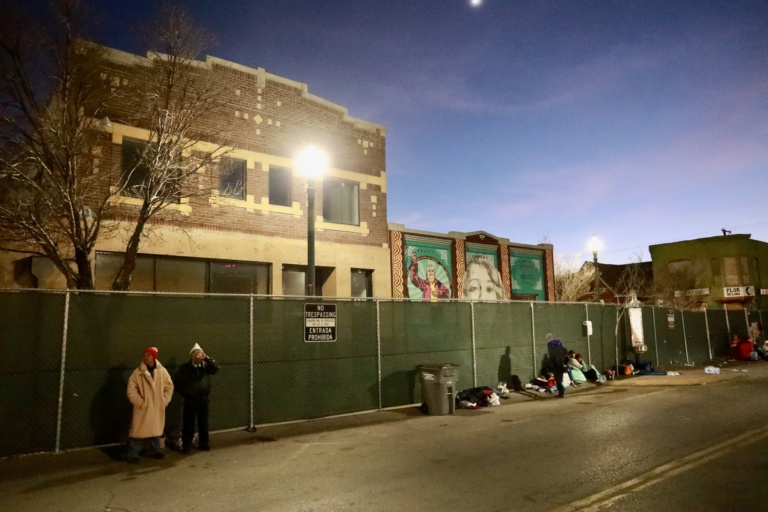
About 21 million people become climate refugees annually, from the big storms and droughts, and by 2050, 1.2 billion people will be climate refugees. Thank the energy companies for most of that.

About 21 million people become climate refugees annually, from the big storms and droughts, and by 2050, 1.2 billion people will be climate refugees. Thank the energy companies for most of that.
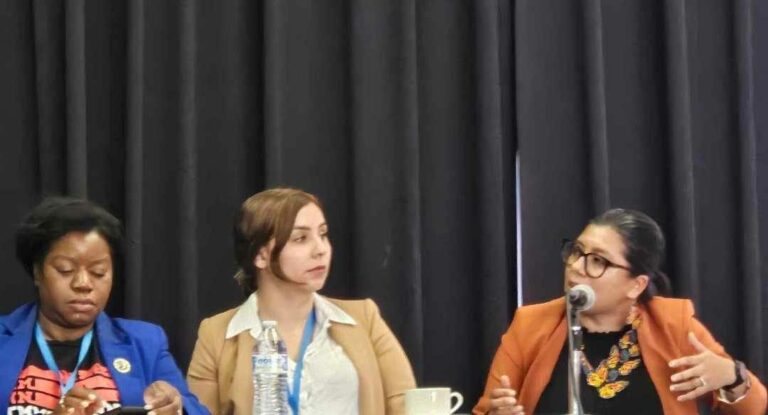
Mira director Laura Carlsen offers a close-up of the impacts of U.S. policy in Mexico and Central America. Juan González, of the Great Cities Institute and Democracy Now!, examines immigration, US policy and the links between forced immigration and sanctions, and Gimena Sánchez of WOLA looks at policy in Colombia and the Andean region. Mark Weisbrot of the Center for Economic and Policy Research discussed the history and the impact of U.S. economic sanctions.
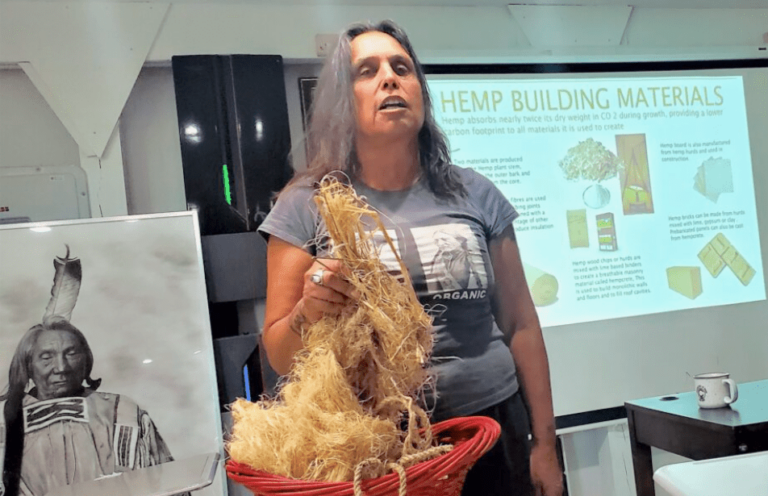
A global enterprise based in Spain may seem an unlikely role model for a fledging American Indian initiative. But inspired by its success, Winona’s Hemp and Heritage Farm in Anishinaabeg territory is sowing the start of an intertribal cooperative consortium.
Carefully treading a crossing of slippery stones strung across the shallow Rio Grande between Ciudad Juárez and El Paso, trickles of migrants climbed up the embankment on the U.S. side.
Joining with others who had crossed from down river, the asylum seekers waited peacefully to surrender to U.S. Customs and Border Protection agents. Watching the evolving ritual were a gaggle of Mexican journalists and local residents. A young man from Venezuela with one leg hopped around on crutches while a pair of municipal cops observed the drama from a parked truck. Standing atop the Mexican embankment, a young girl gazed across the narrow river at the forming line of asylum seekers of all ages, tears welling up in her sad eyes.
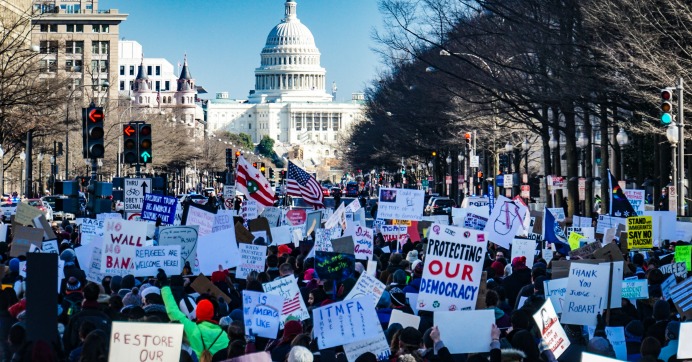
Two major developments can be inferred from the results of the November 8, 2022 mid-term elections in the United States. First, the voters did not punish Joe Biden after his first two years as president as the pre-election polls had predicted they would. Consequently, Donald Trump’s political standing has diminished along with the legitimacy of his leadership role in the Republican Party.
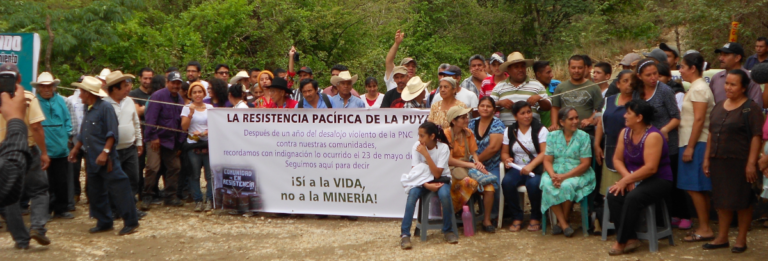
Nevada-based mining firm is suing Guatemala for more than $400 million, the first suit of its kind for the impoverished Central American country. The company contends that the Guatemalan government didn’t do enough to protect its investments in the country. But that’s news to my community and others who faced violent police repression when we nonviolently demonstrated to keep these mining operations from poisoning our health and water.
No country identifies itself more closely with the rifle than the United States. A short tour of the Hollywood version of its history is proof enough:
The news that the Mexican government had shut down operations of the elite DEA team in the country – the Special Investigations Unit (SIU) – provoked an avalanche of articles in the press, most of them defending the DEA in order to criticize the president. Hardly any of them spoke about the disastrous history of the Unit, much less about the perverse history and actions of the DEA in Mexico –and in all of Latin America. The agency has left a bloody trail of failures, incompliance with regulations, complicities and corruption in its mission to export the war on drugs as an instrument of social control and U.S. hegemony.
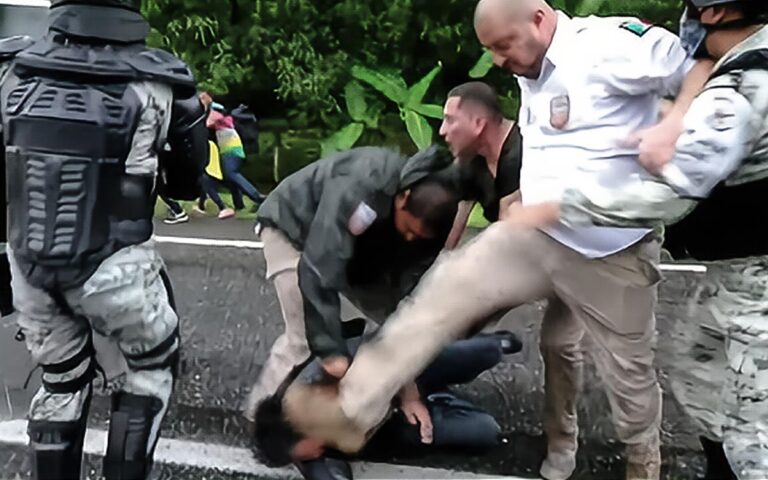
It’s a well-known scene throughout the world: migrant families marching in the streets to demand their rights and seek a better life are brutally repressed by state forces. Police wield billy clubs to attack men, women and children and enforce the message migrants and refugees have heard everywhere: “You are not welcome here”.
More than 70 civil-society organizations have sent a letter to the Mexican government (reprinted below) urging it to refuse to cooperate with a controversial […]