
Latin America is on high alert, especially among the United States’ closest neighbors–the Caribbean, Mexico and Central America. Since Sept. 2 when the Trump government launched a campaign of blowing small ships out of international waters– and after-the-fact pronouncing them “narcoterrorists”– it has carried out 22 strikes and killed at least 87 people. The U.S. government has yet to present evidence of “narcoterrorists”. It has not identified the victims and apparently armed forces did not bother to do post-strike reconnaissance, increasing suspicion as to why no drugs or criminals have been presented to even try to explain the attacks that the UN deems extrajudicial executions and international law experts have called “crimes against humanity”.
We don’t know the names or the histories of the victims. The U.S.—the nation that routinely demands extradition of alleged criminals to be tried in its own courts– immediately extradited the only two survivors–of an Oct. 16 attack off the coast of Colombia and Ecuador. Both were released for lack of evidence, neither was on any known list of U.S. suspects, nor do they have a criminal record. The Mexican government reported that a third survivor of an attack in the Pacific off the coast of Acapulco was rescued, then it claimed the survivor was not rescued, then the matter disappeared completely from the news. The lack of any legal proceedings or attempts to arrest instead of kill shows the U.S. government doesn’t want any testimony or inconvenient facts that might challenge its narrative.
The Pentagon’s decision to carry out a second strike to murder two survivors of the Sept. 2 attack proves the point in the cruelest and most blatant manner.
The bombing of alleged drug boats, and the bombardment of rhetoric claiming that Venezuelan president Nicolas Maduro is a major trafficker of drugs to the United States, a claim unsubstantiated by U.S. data, is only the most overt sign of the intensified militarism in our region. Trump called off negotiations with the Venezuelan government that had already resulted in contracts for U.S. oil companies and he and Secretary of State Marco Rubio now speak openly of regime change in Venezuela, authorizing CIA operations on Venezuelan soil and flirting with the disastrous notion of a land invasion.
There used to be a time when toying with the idea of an unprovoked attack on a sovereign nation to take control of its resources was kept under wraps in the nation heralded as the beacon of democracy. But the rules have changed. The patriarchal maxim of might makes right has triumphed over all considerations of democracy and rule of law.
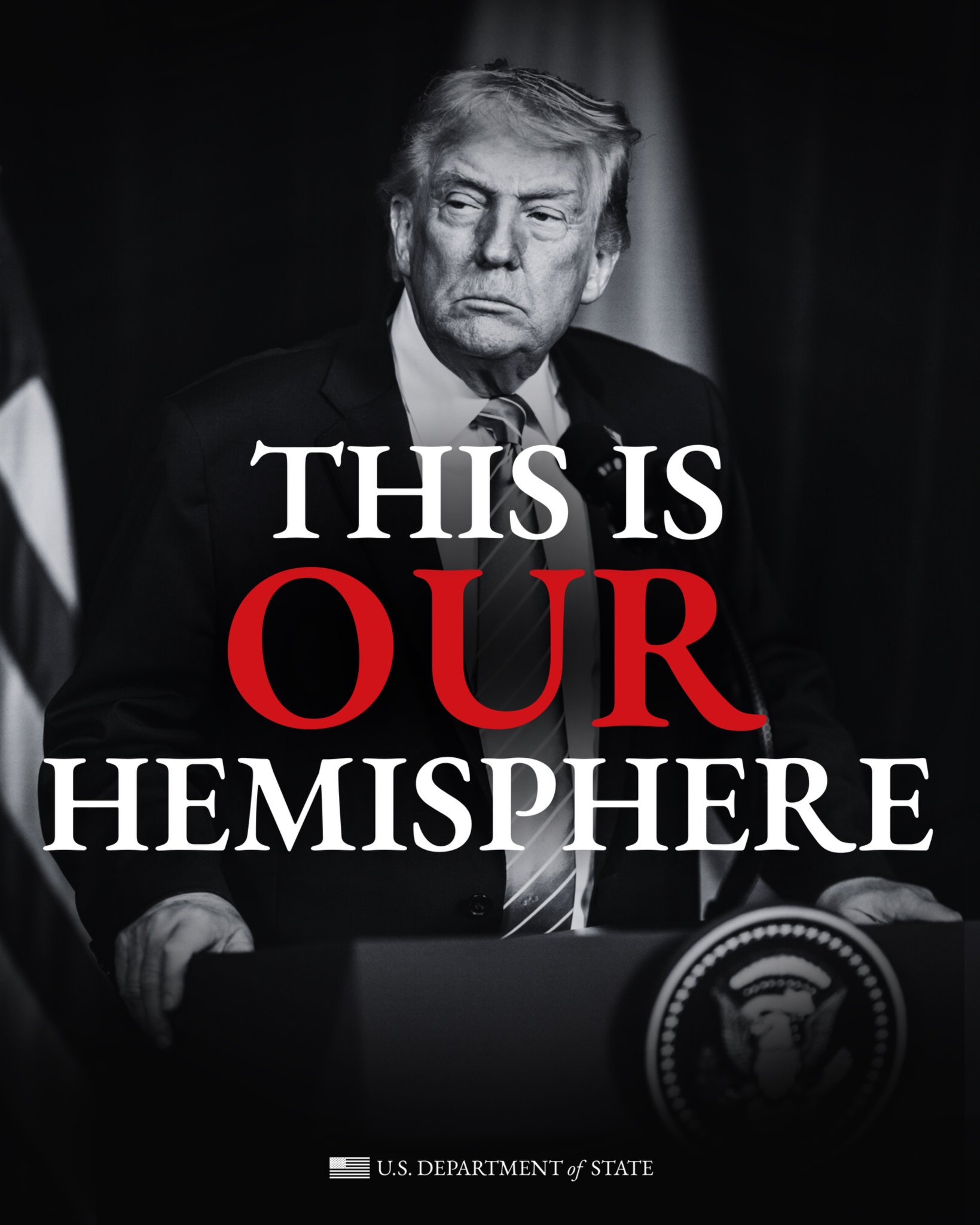
The hypermasculinity that drives policy today considers diplomacy as weakness, violence as victory and lethal arms as the means and the symbol of domination. Authoritarianism—the autocratic power of a strong-man figure– is the natural corollary. Not since Teddy Roosevelt famously defended “manhood first” and advised to “Speak softly and carry a big stick” has there been a foreign policy so completely dominated by hypermasculinity. Roosevelt intervened militarily in Cuba, Panama, the Dominican Republic, Nicaragua and Haiti in his term from 1901-1909. Trump seems to aspire to the same gunboat diplomacy. But today the stakes are much higher
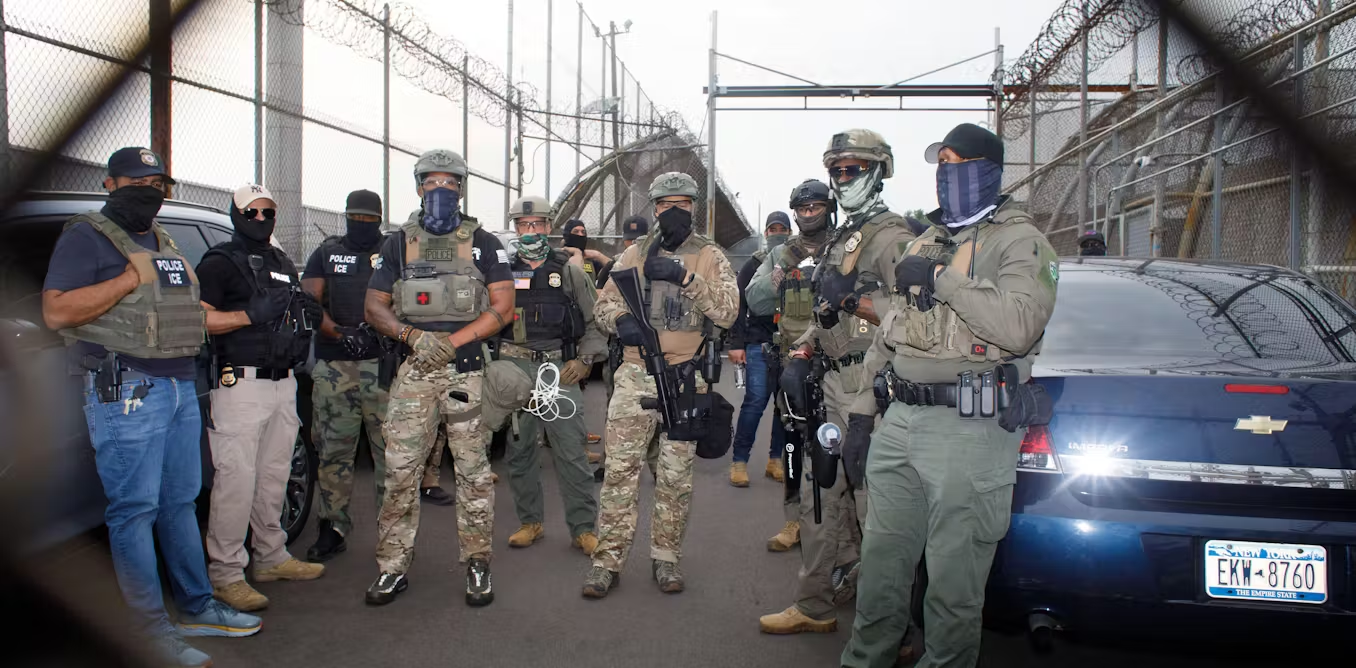
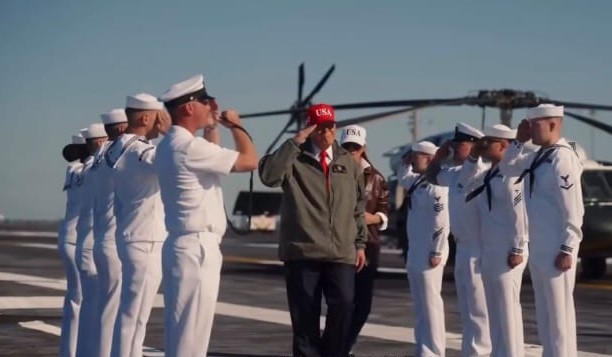
An ostentatious show of force is a central hallmark of hypermasculine foreign policy, and domestic policy for that matter, as shown by Trump’s deployment of military forces to carry out armed immigration raids in US cities. So is changing the name of the Department of Defense to the Department of War to clearly establish stature as the aggressor. The military build-up in the Caribbean includes troops, warships, F-35 fighter planes, drones and the world’s largest aircraft carrier. The Pentagon has reactivated a base on Puerto Rico not used since the Cold War to deploy some 10,000 troops. Even the pro-military site military.com states openly that the build-up “is part of a massive military build-up in the region, in what officials describe as counter-narcotics operations, but the scale and composition of forces suggest preparations for potential broader military action.”
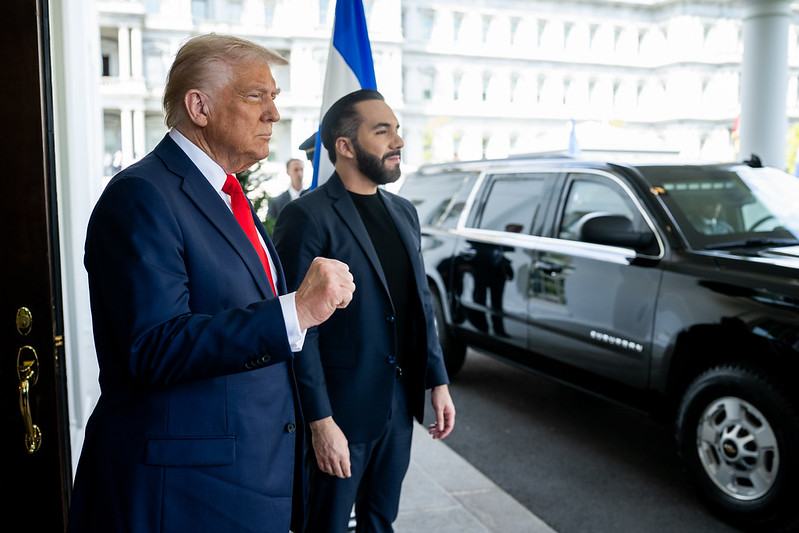
The U.S. military has also stationed fighter planes in El Salvador. Neither Trump or Salvadoran president Nayib Bukele have commented, but Bukele is one of Trump’s staunchest far-right allies in the region and likely to allow his small nation to become a fullblown staging area if asked to. At the same time, the administration leaked plans to stage drone strikes in Mexico and send in troops and agents supposedly to attack drug labs. President Claudia Sheinbaum sloughed off the reports, saying that Trump has promised that won’t happen. But the threats continue and the fear has been planted.
With the Mexico-US-Canada trade agreement coming up for renegotiation and the leverage of economic dependency, the big question is what the U.S. president hopes to harvest. In Venezuela, that question is easily answered—it has the largest oil reserves in the world.
Backed up by the personal vendetta of Marco Rubio and the hawkish machismo of Pete Hegseth, the Trump administration wields threats as weapons. With few nations willing to call his bluff, these can be as effective as actually bombing—especially when accompanied by economic measures such as tariffs. Threats also have a much lower political cost. A land invasion of Venezuela would face powerful military and popular resistance in Venezuela, and protest at home. It would galvanize a large part of Latin America and the Caribbean against the U.S. government. It could even end up being Trump’s Bay of Pigs or a Vietnam-style quagmire–both outcomes the “I never lose” president desperately wants to avoid.
Regional responses
Some regional leaders are standing up. Among the most affected, nearly all heads of state and former leaders of the Caribbean Community protested the boat strikes. Prime Minister Mia Mottley of Barbados warned of the “menacing military vessels of the United States across the Caribbean sea”, stating: “We are facing an extremely dangerous and untenable situation in the southern Caribbean, and as a people with a tragic history of being subjected to centuries of big power, orchestrated genocide, terrorism and warfare, and as a small state, we have invested tremendous time and energy and effort in establishing and maintaining our region as a zone of peace.”
The region adopted the designation as a “Zone of Peace” in 1979 to advance peace and “repudiate the concept of the region as a sphere of influence for any power”. The Community of Latin American and Caribbean States (CELAC) proclaimed all of Latin America and the Caribbean as a Zone of Peace in 2014. Lula da Silva in Brazil and Colombia’s Gustavo Petro have openly denounced the U.S. strikes and defended the region´s decision. Their position rejects the Trump administrations reassertion of the Monroe Doctrine.
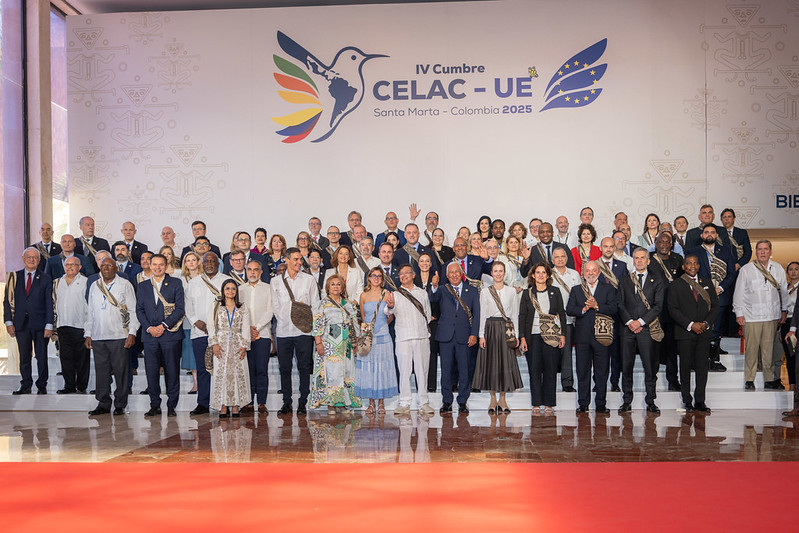
Latin America is in the crosshairs of an increasingly aggressive and lawless U.S. government. Trump and Company’s foreign policy is unabashedly imperialist in its move to reestablish hegemony and access to resources in the region and to fence its “backyard” to keep out China. Today, solidarity and defense of international law is more important than ever.
But if the Nov. 9-10 meeting between the European Union and the Community of Latin American and Caribbean States (CELAC) is any indication, way too many world leaders still won’t stand up to Trump. European leaders shunned the long-planned meeting held in Santa Marta, Colombia, because President Trump has repeatedly stated his opposition to the CELAC, which is a regional forum formed without the United States. That pressure persuaded many Latin American and European Union leaders to stay away (including prominent pushover, Ursula von der Leyen, president of the European Commission). Only nine of 60 heads of states attended.
Overall, there has been shockingly little response from Europe or other regions to the ongoing attacks in the Caribbean or the boasts to take out Maduro. The extreme right and the Trump administration takes full advantage of the silence. If the attacks on Latin America are accepted as the new normal like the genocide in Gaza was, there might be no turning back. We cannot leave the brave Latin American and Caribbean leaders alone in their opposition. Europe has a critical role in defending international human rights and human life. It must play that role boldly, in solidarity, but even more importantly to defend its own soveriegnty and to stop the U.S. government from claiming more victims and extending its imperialist violence to new terrain.
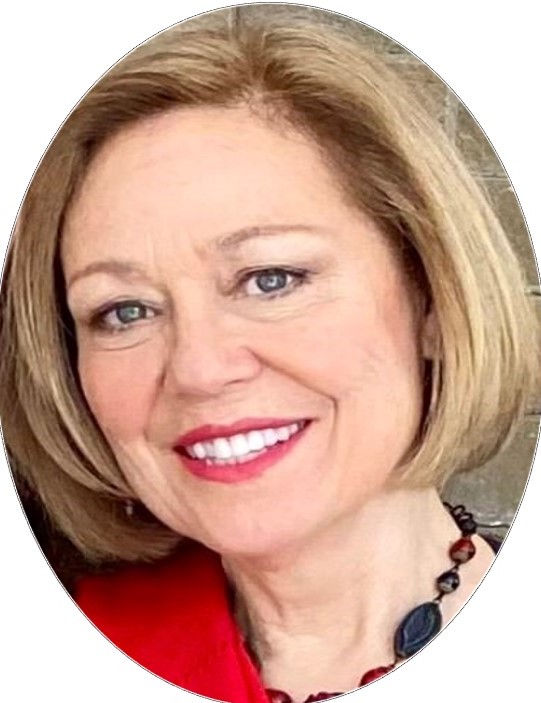
Laura Carlsen is the Director of the feminist international relations think tank, Mira Feminisms and Democracies, based in Mexico City. She is a political analyst, commentator and journalist on regional relations, U.S. policy, social movements and gender justice. A version of this article was originally published in German in the December 2025 edition of the magazine Südlink.