Making Mining Dreams Come True in Mexico
December 15, 2014
NOTE: This article is the twelfth in a series by the CIP TransBorder Project that examines the water crisis on the U.S.-Mexico border. “I think […]
NOTE: This article is the twelfth in a series by the CIP TransBorder Project that examines the water crisis on the U.S.-Mexico border. “I think […]
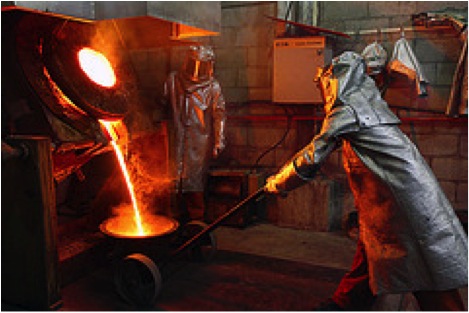
The three richest men in Mexico – Carlos Slim Helú, Alberto Bailléres González, and Germán Larrea Mota-Velasco — are also the owners of Mexico’s top three mining corporations.
The question facing Sonora and most other states on both sides of the international border across the TransBorder West is whether governments and inhabitants are willing to accept the expense and impact of sustaining their hydraulic societies. Whether the benefits of new water megaprojects outweigh the costs?
An Americas Program slideshow on women’s resistance, organization and hope in Mexico 2014.
Hydraulic megaprojects will keep Sonora “competitive and sustainable” and create a “Nuevo Sonora,” declared Governor Guillermo Padrés at the start of his six-year term (2009-2015). Elsewhere, local and national governments and international institutions are shifting their focus away from megaprojects like dams.
Sonoran Governor Padrés launched a package of water megaprojects, including an aqueduct to transfer water from the Yaqui River to the depleted Sonora River basin, as part of the Sonora SI in 2010. Yaqui opposition to the aqueduct, water contamination and the discovery that the governor had illegally built dams on his family’s ranch has cast a shadow on the governor’s promise of a New Sonora.
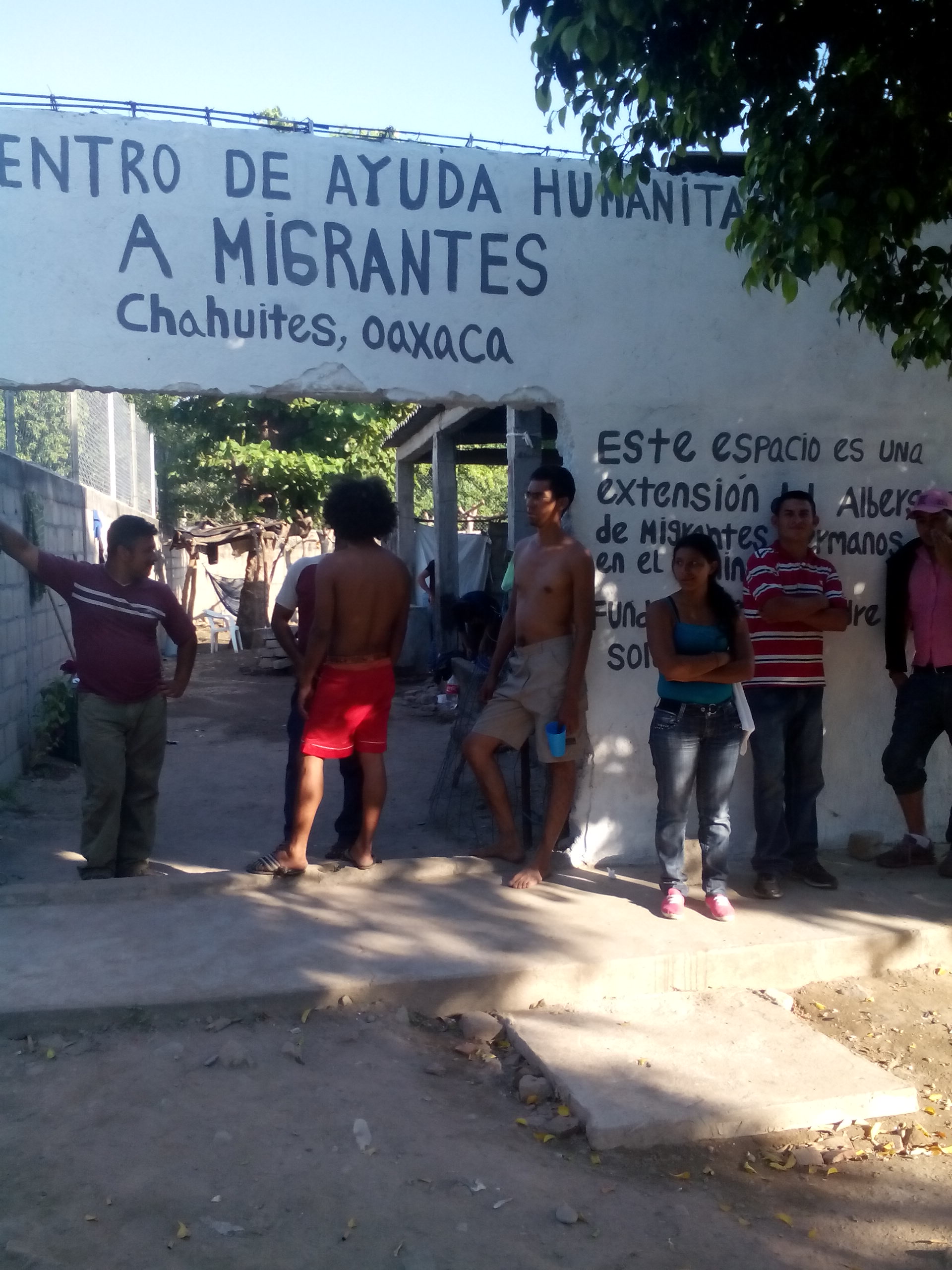
Adrián Rodríguez Garcia and Wilson Castro, who provided food and other aid to migrants in Mexico State were shot to death in their pick-up truck on Nov. 23. A criminal gang for its assaults on migrants in the town of Tequixquiac, north of Mexico City, fired a round of bullets into their truck.
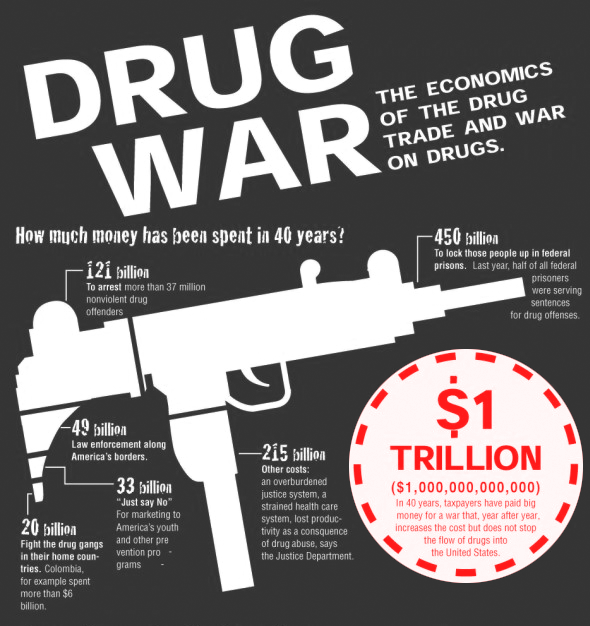
For too many people living in the United States, it has been easy to ignore what’s happening in Mexico. But the plain truth is that the money that’s fueling this war is coming from one place: the United States. And it’s our job to stop it.
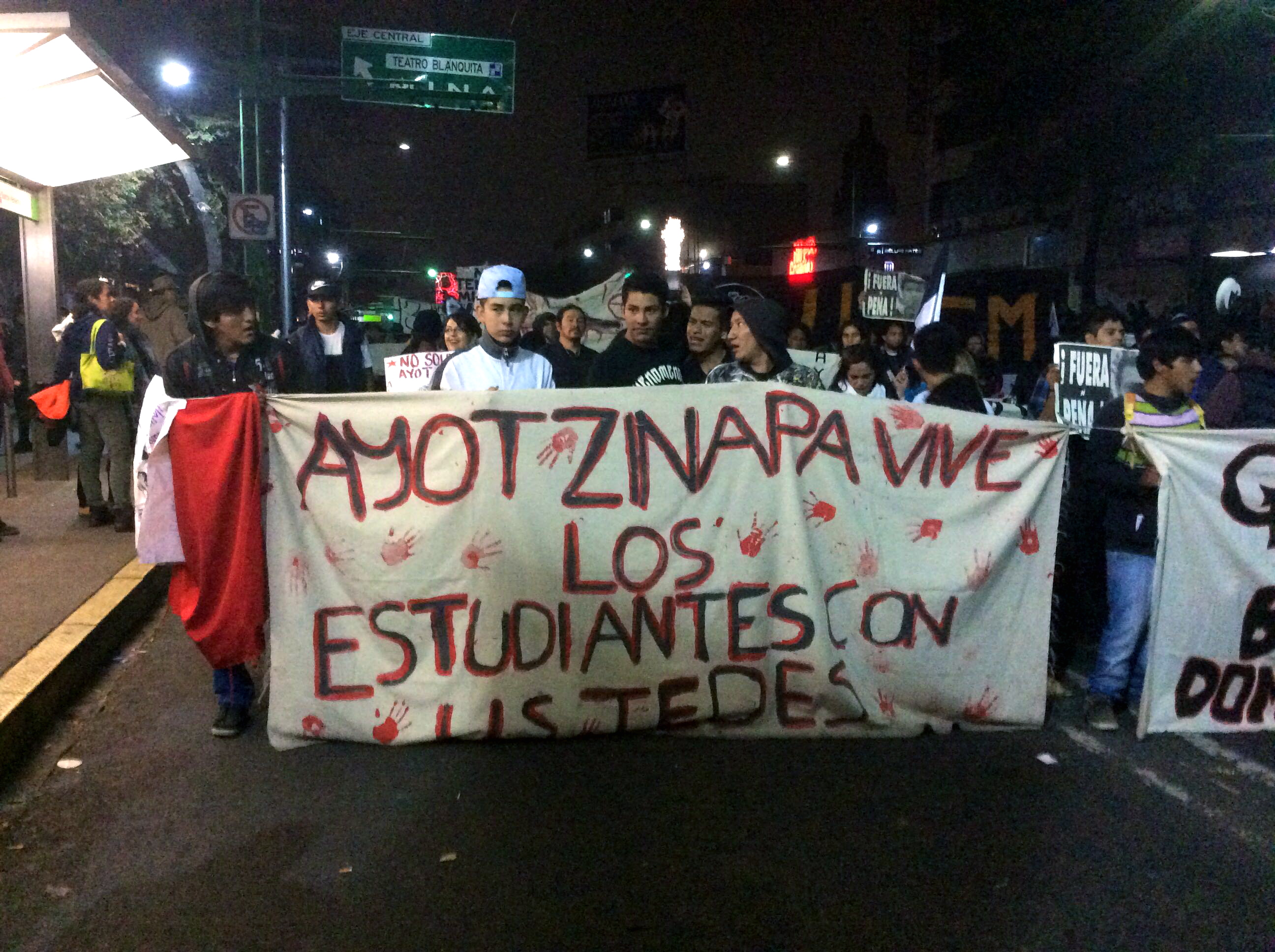
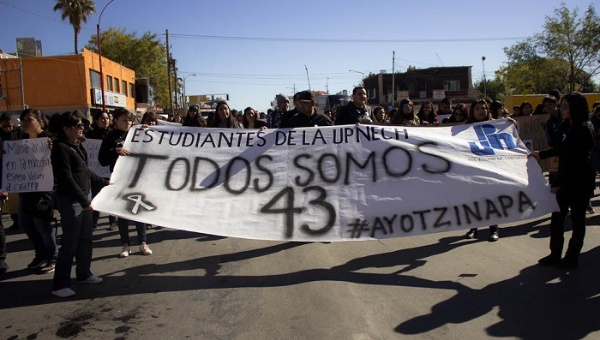
Thousands of students marched from Tlatelolco Square, site of the notorious student massacre of 1968, to the Zocalo in Mexico City Nov. 20 in solidarity with the 43 disappeared students of the Rural Teachers’ College in Ayotzinapa, Guerrero. The student march, which included both public and private universities and high schools, followed national strikes organized in 79 universities throughout the country.
On a day when the world protested state violence against the Mexican students of the Ayotzinapa rural teachers college, Ciudad Juarez was no exception.