Biden’s Immigration Choice and Mexico’s Dilemma
December 30, 2023
US immigration policy should not be based on Republican lies and the desire to fund foreign wars. Mexican immigration policy should not be based on US political ambitions.

US immigration policy should not be based on Republican lies and the desire to fund foreign wars. Mexican immigration policy should not be based on US political ambitions.
Stating that “oil and lithium belong to the nation”, President Andrés Manuel López Obrador issued a decree “to nationalize lithium so that it cannot be exploited by foreigners, neither by Russia, nor by China nor by the United States” Americas Program columnist Talli Nauman argues that betting on lithium ‘is a buy-in to a doomed U.S. climate policy of incentives for electric passenger vehicles that is a myopic approach to rescuing the planet and endangers Mexican environmental stability.’
March 8 in Mexico is not only a show of strength and convening power for women’s movements, but also an opportunity to see how the movement is changing with the times.
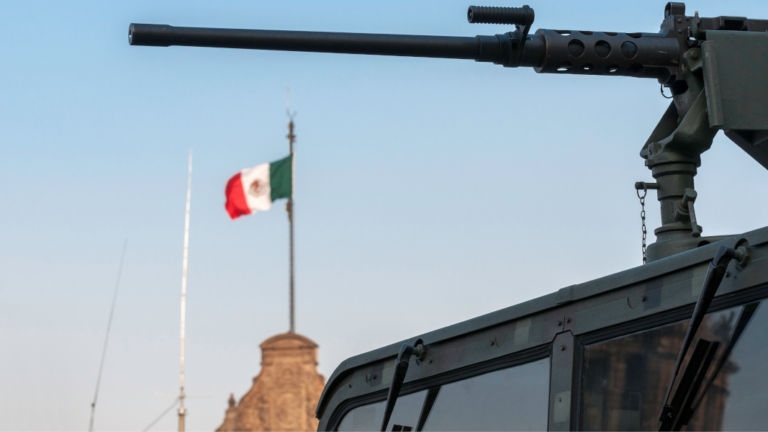
Militarization, now institutionalized in the Constitution and in practice, extended for the next six years and quite possibly forever, is not just the latest bone of contention between political parties. It is an issue that has profound implications for Mexican society, democracy, security, gender equality and human rights. It has to be analyzed within the framework of these considerations, beyond the false and hypocritical positions of the political parties.
Carefully treading a crossing of slippery stones strung across the shallow Rio Grande between Ciudad Juárez and El Paso, trickles of migrants climbed up the embankment on the U.S. side.
Joining with others who had crossed from down river, the asylum seekers waited peacefully to surrender to U.S. Customs and Border Protection agents. Watching the evolving ritual were a gaggle of Mexican journalists and local residents. A young man from Venezuela with one leg hopped around on crutches while a pair of municipal cops observed the drama from a parked truck. Standing atop the Mexican embankment, a young girl gazed across the narrow river at the forming line of asylum seekers of all ages, tears welling up in her sad eyes.
The IX Summit of the Americas was on the wrong path from the very beginning. For the first time since its creation in 1994, this meeting in which all the leaders of the Americas meet triennially, was held a year late.
No country identifies itself more closely with the rifle than the United States. A short tour of the Hollywood version of its history is proof enough:
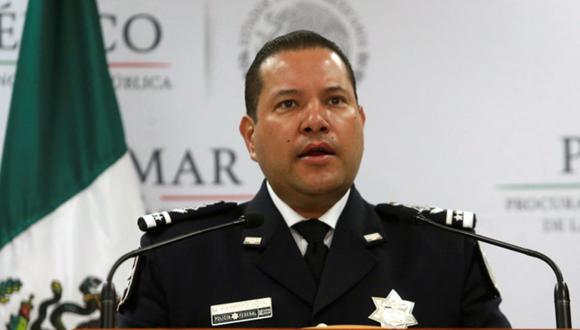
The news that the Mexican government had shut down operations of the elite DEA team in the country – the Special Investigations Unit (SIU) – provoked an avalanche of articles in the press, most of them defending the DEA in order to criticize the president. Hardly any of them spoke about the disastrous history of the Unit, much less about the perverse history and actions of the DEA in Mexico –and in all of Latin America. The agency has left a bloody trail of failures, incompliance with regulations, complicities and corruption in its mission to export the war on drugs as an instrument of social control and U.S. hegemony.
It’s a well-known scene throughout the world: migrant families marching in the streets to demand their rights and seek a better life are brutally repressed by state forces. Police wield billy clubs to attack men, women and children and enforce the message migrants and refugees have heard everywhere: “You are not welcome here”.
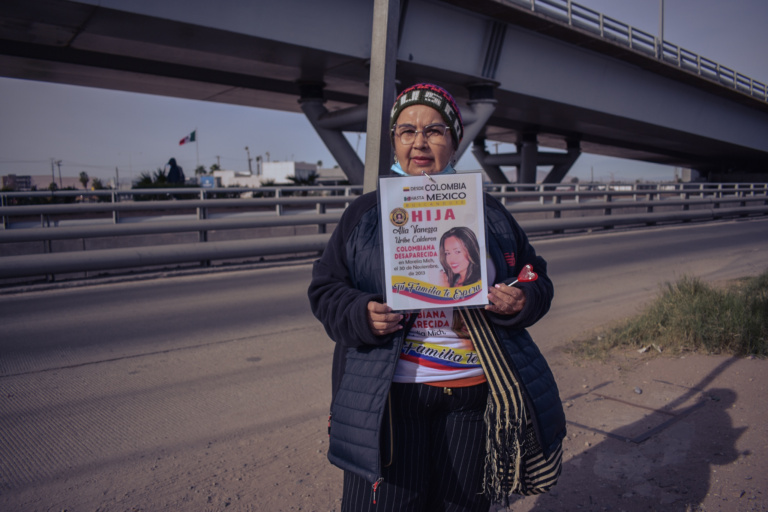
“The eyes don’t lie” repeats Ruth, a Salvadoran woman looking for her son in the city of Tijuana. She holds a large photograph of son Rafael, as two homeless men on the street watch her closely, searching their memories for a recollection of the face of the disappeared son. “He might have changed over the years, but the eyes don’t lie,” says the mother.