Can Mexico’s new President resist mounting pressure to nuke the climate?
March 30, 2025
By Talli Nauman The anniversary of a fire inside a reactor building at the Laguna Verde Nuclear Power Plant (CNLV) set off the first […]
By Talli Nauman The anniversary of a fire inside a reactor building at the Laguna Verde Nuclear Power Plant (CNLV) set off the first […]
Por Talli Nauman El aniversario de un incendio en el edificio de un reactor de la Central Nucleoeléctrica Laguna Verde (CNLV) dio inicio al […]
Icono indígena Lakota de 80 años saldrá de la cárcel tras casi medio siglo, por un ‘esfuerzo de buena fe’ Este artículo del 20 […]
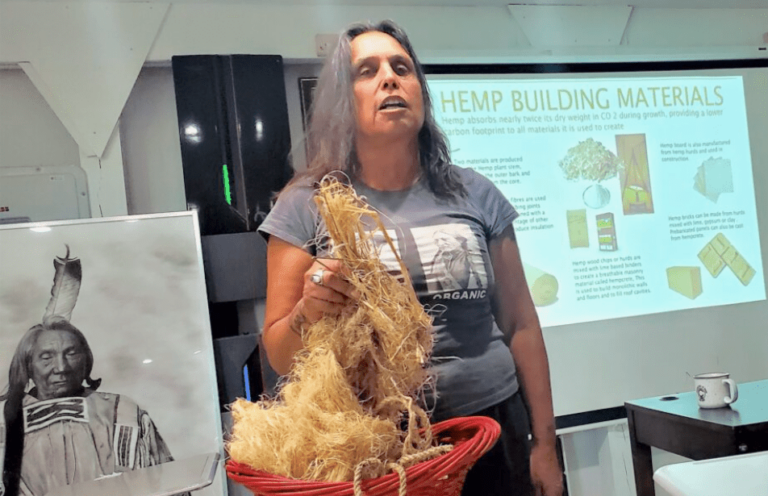
Una empresa global con sede en España puede parecer un modelo poco probable para una incipiente iniciativa indígena americana. Pero inspirada por su éxito, Winona’s Hemp and Heritage Farm en el territorio Anishinaabeg está sembrando el inicio de un consorcio cooperativo intertribal.
A global enterprise based in Spain may seem an unlikely role model for a fledging American Indian initiative. But inspired by its success, Winona’s Hemp and Heritage Farm in Anishinaabeg territory is sowing the start of an intertribal cooperative consortium.
Desfilando como una nacionalización, el decreto presidencial de 2023 de una reserva de litio en México responde a una política climática estadounidense condenada. La estrategia de Washington gira en torno a los incentivos para los vehículos eléctricos de pasajeros que utilizan estrictamente materias primas para baterías “hechos en las Américas”, como el litio. Es un enfoque miope – por no decir nefario — para rescatar el planeta, y pone en tela de juicio la estabilidad ambiental mexicana.
Stating that “oil and lithium belong to the nation”, President Andrés Manuel López Obrador issued a decree “to nationalize lithium so that it cannot be exploited by foreigners, neither by Russia, nor by China nor by the United States” Americas Program columnist Talli Nauman argues that betting on lithium ‘is a buy-in to a doomed U.S. climate policy of incentives for electric passenger vehicles that is a myopic approach to rescuing the planet and endangers Mexican environmental stability.’
Con la publicación en abril del informe más reciente del Panel Intergubernamental sobre Cambio Climático, ha llegado el momento de celebrar un gran avance de los Pueblos Indígenas en el consejo asesor científico que guía la política de calentamiento global para 195 países de la ONU. Los líderes de opinión deberían forzar los límites para obtener más de lo mismo.
With the release in April of the report from the Intergovernmental Panel on Climate Change, the time is ripe to celebrate a breakthrough by Indigenous Peoples in participation on the scientific advisory board that guides global warming policy for 195 U.N. countries. Opinion leaders should push the envelope for more of the same.
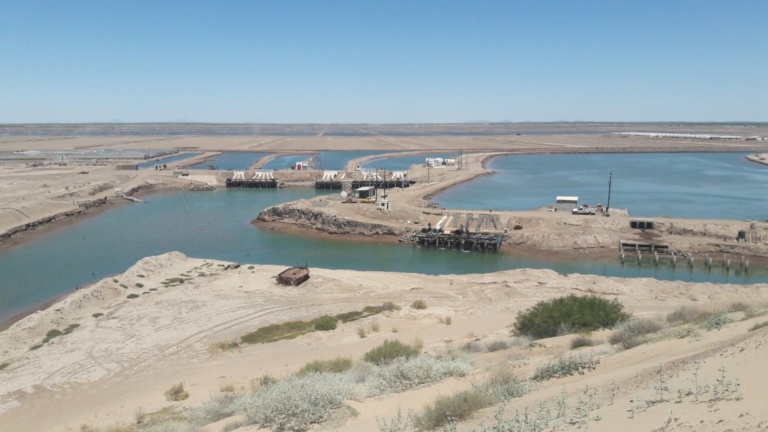
In the Indigenous Yaqui territory of the Mexican state of Sonora on the northern border, water defenders who oppose pipelines have to choose between self-exile or the likely outcome of imprisonment, kidnapping, disappearance, and murder. The defenders have called for ‘cease-fire’ in the long-running water war.